
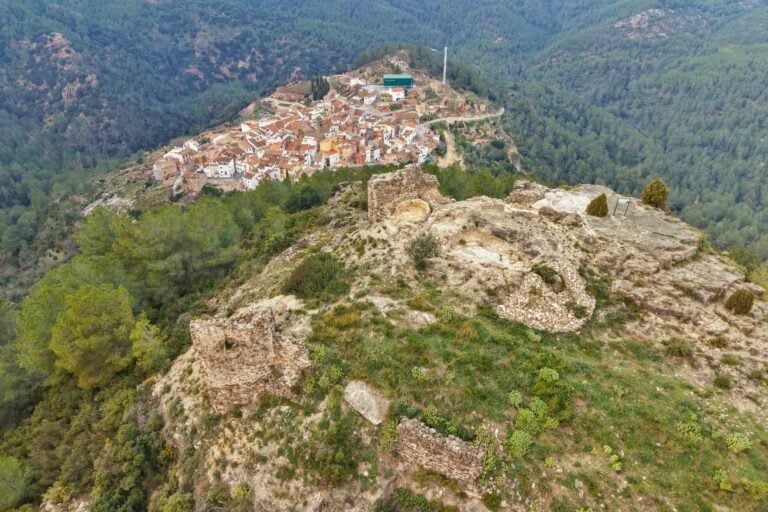
Some landscapes are admired for their beauty. Others are remembered for what happened there. In Espadán-Mijares, both experiences come together. Between the Sierra de Espadán and the Mijares River, visitors can walk through one of the most meaningful war heritage landscapes in the province of Castellón, where trenches, shelters, parapets, command posts and defensive positions still tell the story of a decisive chapter of the Spanish Civil War.
This is not just a journey through nature. It is a journey through memory.
A Territory Marked by the Battle for Valencia
During the Spanish Civil War, after the Battle of Teruel, Franco’s troops advanced south towards Valencia. What seemed to be a fast offensive became one of the great moments of resistance of the Republican army. The difficult terrain, the mountain passes and the defensive organisation of the Republican forces turned this area into a key scenario of the Battle of Levante, also known in English as the Battle for Valencia.
It was in this context that the XYZ Line was created: a vast defensive system stretching for more than 150 kilometres, from Almenara in Castellón to Santa Cruz de Moya in Cuenca. Its purpose was to stop the advance of Francoist artillery and aviation, stabilise the front and give the Republican rear-guard time to reorganise.
Today, the remains of this military landscape can still be discovered in Espadán-Mijares. Walking these routes means understanding how the mountains became a natural fortress and how villages, castles, ridges and valleys were transformed into strategic points of defence.
Five Villages, One Shared Memory
The war heritage of Espadán-Mijares can be explored through five municipalities that played a significant role during the Battle for Valencia: Aín, Alcudia de Veo, Espadilla, Suera and Villamalur.
Each of them preserves traces of that period. Some are hidden among pine forests and rocky slopes. Others stand near castles, old paths or former front-line positions. Together, they form a powerful itinerary for travellers interested in history, hiking and authentic inland tourism.
This is battlefield tourism understood from respect and interpretation. It is not about glorifying war, but about learning from the past, preserving memory and discovering how history is still written into the landscape.
Aín: Resistance on the Mountainside
In Aín, the visitor enters one of the most symbolic areas of the XYZ Line. Resistance Centre No. 2 was located at the Picayo vertex, forming part of a defensive line that came from the hills of La Vall d’Uixó and La Vilavella.
In July 1938, when Francoist troops reached the XYZ Line through Alcudia de Veo and La Vilavella, the Aín sector had to be reorganised. The fighting around Torcas vertex became especially significant, with episodes of intense resistance that were later used as a symbol by Republican propaganda.
Today, Aín offers visitors the chance to discover parapets, former shooter positions, defensive structures and mountain viewpoints that help explain the strategic importance of this area. The surrounding landscape, now calm and silent, contrasts deeply with the intensity of the events that took place here.
Alcudia de Veo: Between Jinquer, the Castle and the Front Line
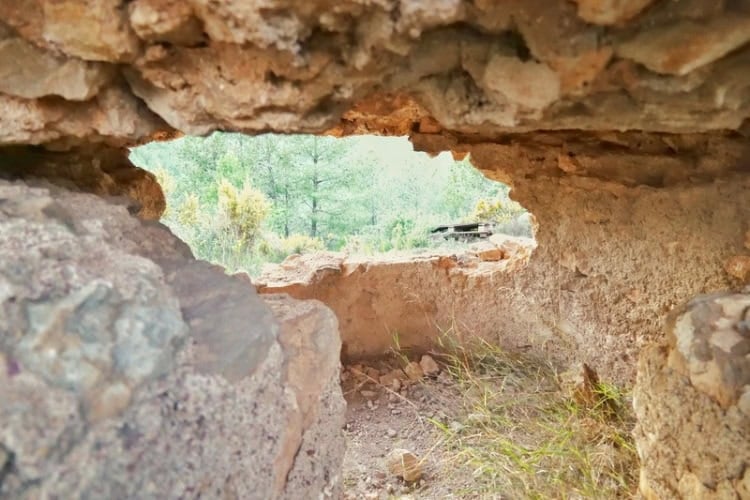
Alcudia de Veo is another essential stop on this route of memory. As the Francoist offensive advanced along the coast and through the Palancia valley, the strong Republican resistance forced the creation of new military structures and alternative routes of penetration.
From the deserted village of Jinquer, several attacks tried to advance towards Almenarilla. The area known as the “Tetones” or “Gemelas” became a contested position, changing hands and suffering repeated counterattacks.
After the front became paralysed during the Battle of the Ebro, the Francoist 108th Division reorganised the defences around Alcudia de Veo. The remains found in this area include command posts, fortifications, machine-gun nests and defensive lines between the castle and the natural site of the Órganos de Benitandús.
For visitors, Alcudia de Veo offers one of the clearest examples of how the war transformed the landscape. Nature, ruins and memory coexist in a setting of great historical and visual value.
Espadilla: The Mijares Line and the Defence of Time
Espadilla tells another part of the story: the attempt to slow down the Francoist advance towards Valencia and Sagunto. As Francoist troops moved towards Castellón, Republican forces chose to resist rather than withdraw, buying time so that the XYZ Line could be fully prepared.
To prevent the advance towards Sagunto, the Mijares line was organised to connect with the troops of Sarrión, in Teruel. In July 1938, Francoist advances forced the evacuation of Espadilla, which was eventually taken by cavalry troops.
Today, defensive remains can still be found in places such as Peña la Mula and Cueva Negra. These vestiges help visitors understand how the terrain was used as part of a wider defensive strategy. Walking through Espadilla means following the trace of a landscape that was once used to delay, resist and protect.
Suera: Command Posts, Bombardments and Mountain Routes
Suera was also deeply marked by the events of 1938. After the conquest of Castellón, Francoist troops pushed towards the Sierra de Espadán, both along the coast and through the inland mountain routes.
Suera was taken on 5 July 1938, and the offensive continued with the bombing of the mountain area by the Condor Legion. Soon after, Republican counterattacks led to reinforcements being sent to nearby strategic points such as Maús Castle.
When the front became stabilised, the Francoist 108th Division established a command post in Suera. The village also had an aid station and a mountain company base used for the evacuation of wounded soldiers.
Among the most striking remains linked to this period are the positions around Casalet, the references to the Castle of Maús and the warhead of an aviation bomb from the Condor Legion, later transformed into a bell at Mas de la Campana. These elements make Suera a destination where history can be read through both military remains and local heritage.
Villamalur: One of the Best-Preserved Defensive Landscapes
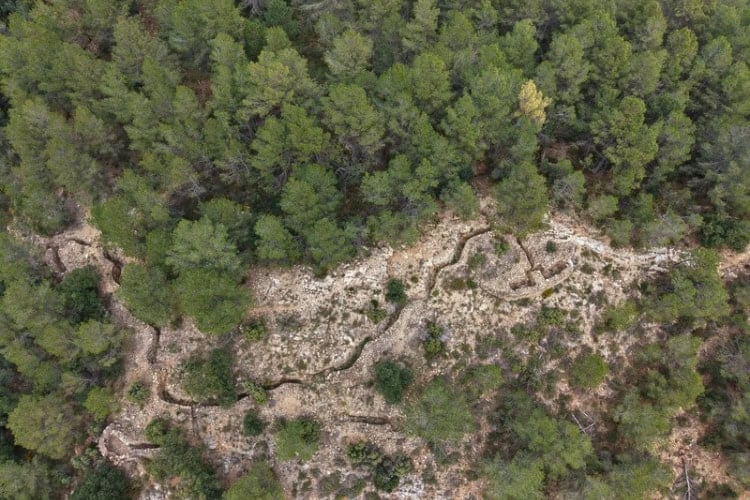
Villamalur stands out for the remarkable state of conservation of its defensive structures. At the beginning of July 1938, the Mijares line was being fortified by the 3rd Battalion of Works and Fortifications. Sappers prepared another line from Jinquer to Villamalur and Ayódar, extending towards Peña Saganta in Espadilla.
Different Republican brigades defended Villamalur until it was taken by the Francoist 108th Division on 24 July 1938. Later, the Francoist defences were organised into Resistance Centres, designed to defend wide areas until reinforcements could arrive.
In December 1938, after several Republican offensives, the fortification of the area was expanded. Two important Resistance Centres were created: one in Castillejos and another between the Moorish fortress, Cabezo and Jupillo.
Today, Villamalur preserves parapets, fortifications, embrasures and construction details that allow visitors to understand how these military structures were built and used. It is one of the most impressive places in Espadán-Mijares for those interested in war heritage and historical landscapes.
Battlefield Tourism with Respect and Meaning
The war memorial sites of Espadán-Mijares are not conventional tourist attractions. They are places of memory. Spaces where silence, nature and history invite visitors to reflect.
Walking among trenches, parapets and former military positions is a way of understanding the past from the ground itself. The mountains reveal why this territory was so difficult to conquer. The remains show how soldiers adapted to the terrain. The villages remind us that war also affected daily life, forcing evacuations, transforming paths and leaving marks that can still be seen today.
This is tourism for those who want more than a beautiful view. It is for travellers who want to understand, interpret and connect with the identity of a territory.
Nature, History and Inland Castellón
One of the great strengths of Espadán-Mijares is the way its war heritage blends naturally with the landscape. The same routes that lead to trenches and shelters also cross forests, ravines, castles, viewpoints and traditional paths.
This makes the destination ideal for combining battlefield tourism with hiking, photography, cultural visits and local gastronomy. Each village offers a different way to approach the past, while the surrounding mountains provide the perfect setting for a slow, meaningful and authentic journey.
In spring, the routes come alive with colour. In autumn, the light and silence make the experience especially powerful. In winter, the atmosphere of the mountains reinforces the feeling of walking through a landscape full of memory.
A Destination Where Every Route Tells a Story
Espadán-Mijares is not only a place to visit. It is a place to read, step by step.
Its trenches, shelters, command posts and defensive lines are part of a wider story that connects the Spanish Civil War, the Battle for Valencia, the XYZ Line and the lives of the people who experienced those events.
Today, these remains have become an opportunity: to preserve memory, to promote respectful tourism and to invite visitors to discover inland Castellón from a different perspective.
Because there are landscapes that are beautiful. And there are landscapes that speak.
Espadán-Mijares does both.
Espadán-Mijares awaits you. To walk its mountains. To discover its history. To remember its past.
More information: visitespadanmijares.com

Want to discover more hidden gems and helpful travel tips? Join our free newsletter for the latest travel secrets and travel articles.
We are reader-supported and may earn a commission on purchases made through links in this article.

- Darwin, Australia’s Northernmost Capital, Combines Vibrant Markets, Waterfront Life and Access to Kakadu and Litchfield - October 25, 2026
- Paarl: South Africa’s Secret Winelands Escape Where You Can Stay in Historic Wine Tanks - October 25, 2026
- A Quest for the Best Frango Assado in Portugal’s Algarve - October 24, 2026
Planning another trip soon? ✈️
Add GoWorldTravel.com as a preferred source on Google. Click the button below so our local guides, packing hacks, and hidden-gem itineraries always show up first when you search!
Add to Preferred Sources