

Just before dawn, on the edge of the Ria Formosa lagoon, the only sounds are the soft lap of the tide and the distant chatter of migratory birds in the salt marshes.
While the western Algarve draws the biggest crowds, this eastern stretch moves at a far slower rhythm. With one of Europe’s mildest climates, it is a landscape of shifting sandbars, traditional salt pans, and sleepy fishing villages.
Eager to escape the autumn chill, I headed to this quieter corner of Portugal to see what happens when centuries-old traditions manage to outlast mass tourism.
Tavira: A City of Churches and Light
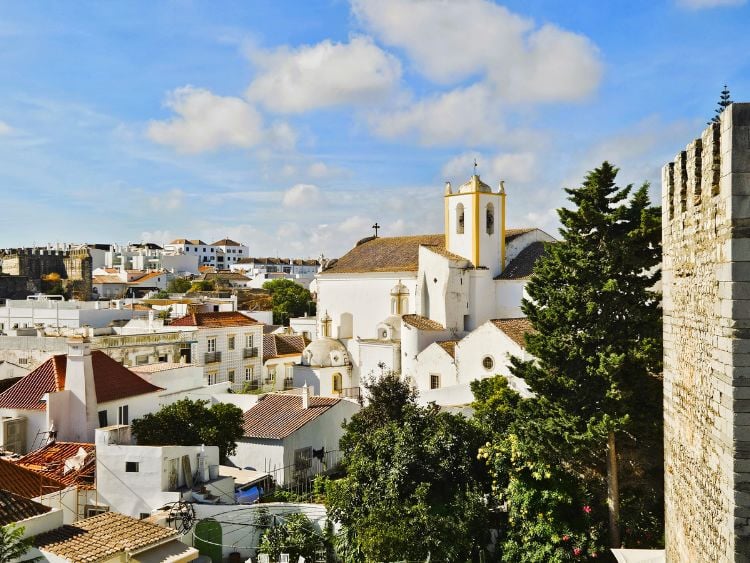
“Tavira is the city of churches,” says Ana, a longtime local, as we step onto the cobblestone alleys. We are immediately met by the Igreja de Santa Maria do Castelo, built on the site of a former mosque, and the humble Igreja de Santiago.
More than 30 churches are scattered across the town, a wave of construction sparked by the 1242 Christian Reconquest and fueled by centuries of maritime wealth.
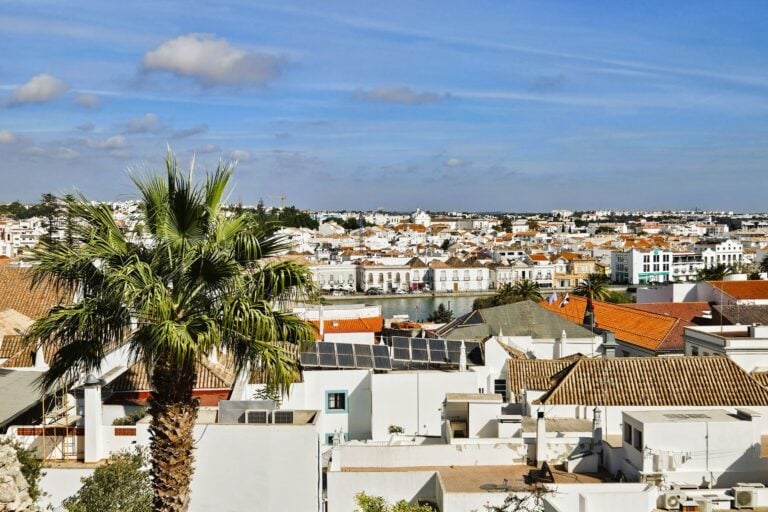
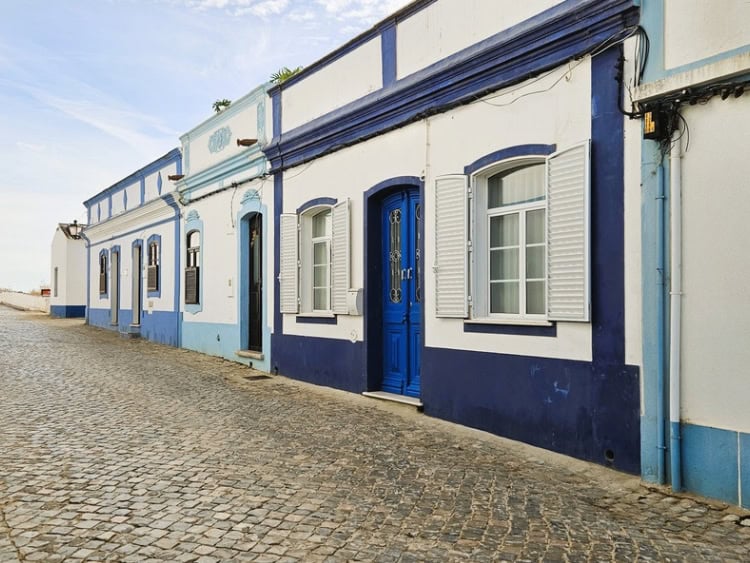
Tavira looks different from the rest of the coast. Its whitewashed houses reflect the sun, creating an intense brightness wherever you look.
Naturally pulled toward the water, we head straight for the river. The calm, wide stream divides the city: its left bank is dotted with cafés and bistros, while its right side is lined by the main square, Praça da República, and Jardim Público de Tavira, the oldest public park in town.
Several bridges connect the two sides, with the Ponte Romana at the center. This seven-arched stone bridge offers a quiet refuge for a slow stroll, a calm underscored by the woman I spot reading in one of its stone alcoves.
A Town Split by Legend
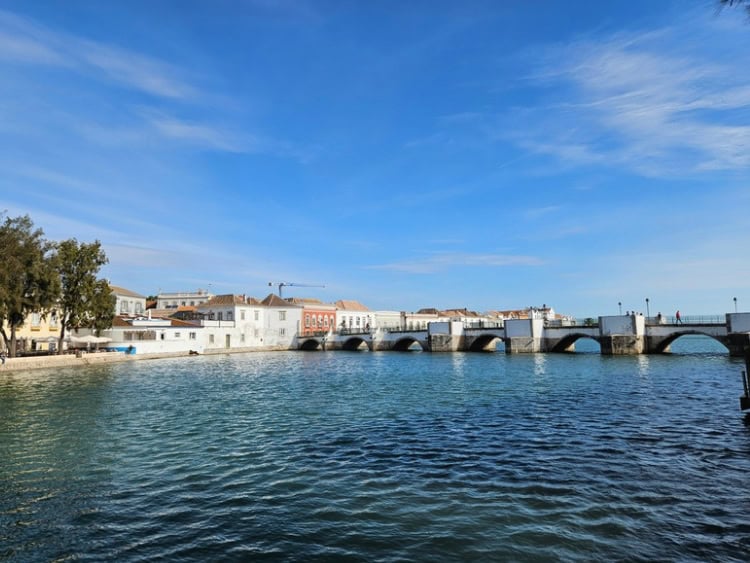
Yet the bridge hides even deeper stories. Right beneath its arches, the river changes its name: upstream, it flows as the Rio Séqua; downstream toward the sea, it becomes the Rio Gilão.
“In Moorish times, a king’s daughter named Séqua fell deeply in love with a Christian knight named Gilão,” Ana explains, gesturing to the water below as we lean against the stone parapet.
“They met in secret on this very bridge, knowing their love was forbidden by war. When both armies finally discovered them, rather than face a life apart, Séqua threw herself into the river upstream and Gilão jumped downstream, choosing to drift together forever.”
Tides of Time
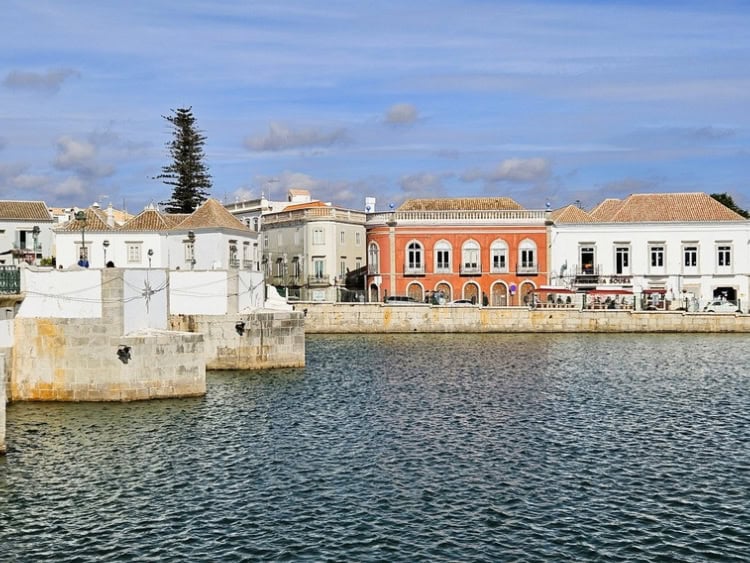
Legends like this are woven through a town shaped by many hands. Phoenicians, Romans, and Moors all left their mark here. Uphill from the river, the old Moorish castle walls enclose quiet gardens and views over tiled rooftops.
Many houses still feature distinct four-pitched roofs, telhados de tesoura, built by master shipbuilders using inverted boat-framing to keep interiors cool.
Tavira grew into the Algarve’s richest port during the Age of Discovery until the 1755 earthquake and a silting river ended its boom. Today, a quieter town remains, where fishing boats still bring in the morning catch, locals gather in squares for espresso, and daily life follows the Atlantic tides.
Cacela Velha: Gateway to the Lagoon
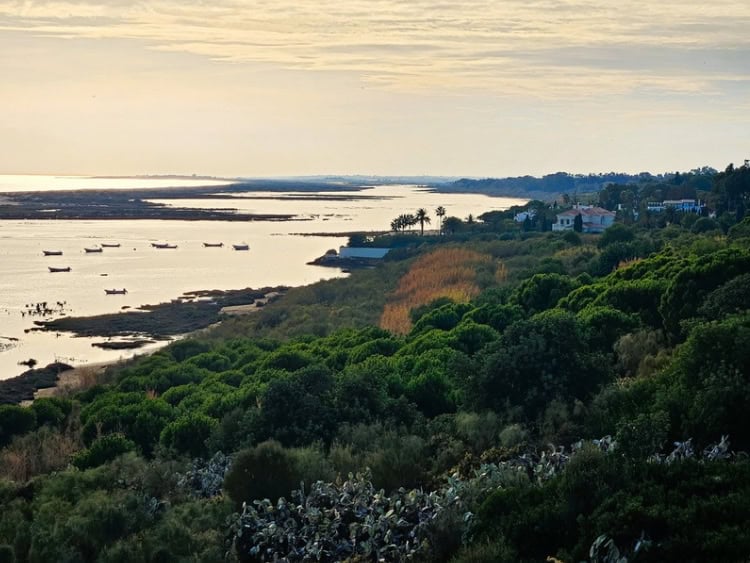
A 15-minute drive east of Tavira brings us to the tiny hilltop village of Cacela Velha. Standing along the old stone walls overlooking the Ria Formosa Natural Park, Ana points toward the sandbar below.
“This used to be a long peninsula until shifting tides opened a new inlet a few years back, turning it into an island,” she explains as we look out over the calm, clear water. “You can walk right across at low tide, though you have to watch the clock. Once the tide comes back in, your only way back is a ride with a local fisherman.”
Stretching for over a mile, the white-sand beach constantly shifts shape with the currents, feeling like a deserted island.
Coastal Calm in Cacela
This point marks the eastern entrance to the Ria Formosa, a protected 37-mile system of lagoons, salt marshes, and six barrier islands that shelters migratory birds and marine life.
Cacela Velha itself is remarkably quiet, consisting of just a 16th-century church, a fortress built atop Moorish castle ruins, and a dozen whitewashed houses, one built by the late Claude Picasso, son of the Spanish painter.
Just down the road, a small restaurant serves oysters and clams harvested straight from the lagoon.
An Unexpected Tropical Sanctuary
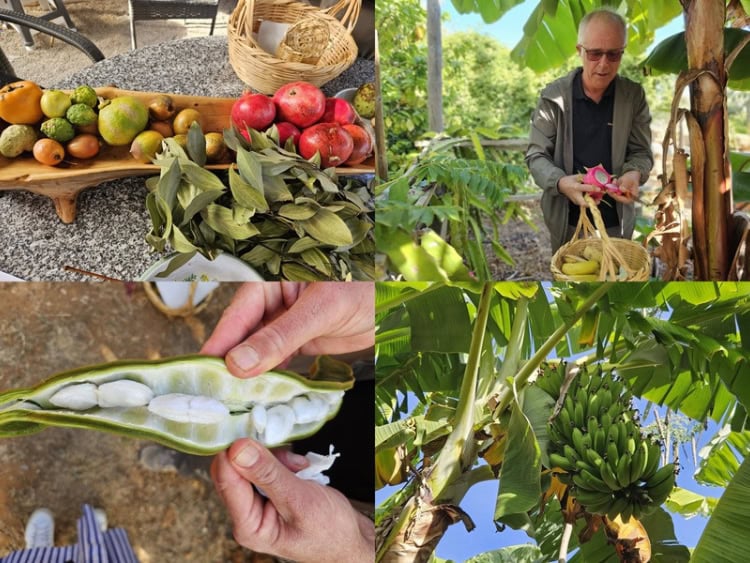
In the quiet agricultural parish of Luz de Tavira, something unexpected hides behind stone walls.
The eastern Algarve has always been rural, famous for oranges, figs, almonds, carob, and ancient olive trees. Yet just a few hundred meters from the Atlantic, this sanctuary grows crops that look entirely out of place in Europe.
Stepping inside, a dense collection of rare edible plants surrounds us. Mango, lychee and avocado trees share the space with papayas, white sapotes, longans, jaboticabas and banana circles.
Creeping flowers and vetiver grass cover the ground beneath them, while dozens of different pomegranate and unusual citrus varieties hang from the branches.
Growing for a Warmer Future
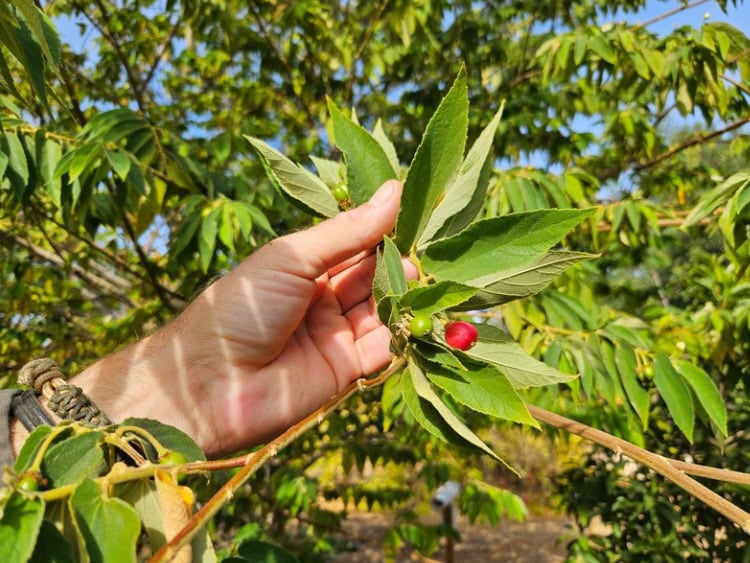
Photo by Zuzana Zimmermannova
Founder Miguel Cotton started this project as a direct response to climate change. With extreme weather threatening how the world grows food, he spent years traveling across different Mediterranean regions to find the right pocket of land where warm-climate, drought-resistant fruit trees could survive.
He finally settled in southern Portugal in January 2019, only to face fiercely dry, poor soil. Undeterred, he and a team of volunteers turned to agroecology.
They sculpted raised contour beds to stop erosion, dug compost ditches to rebuild the earth, and tested a “Dry Orchard Experiment” to grow adult trees without a drop of irrigation.
Eden of 500 Flavors
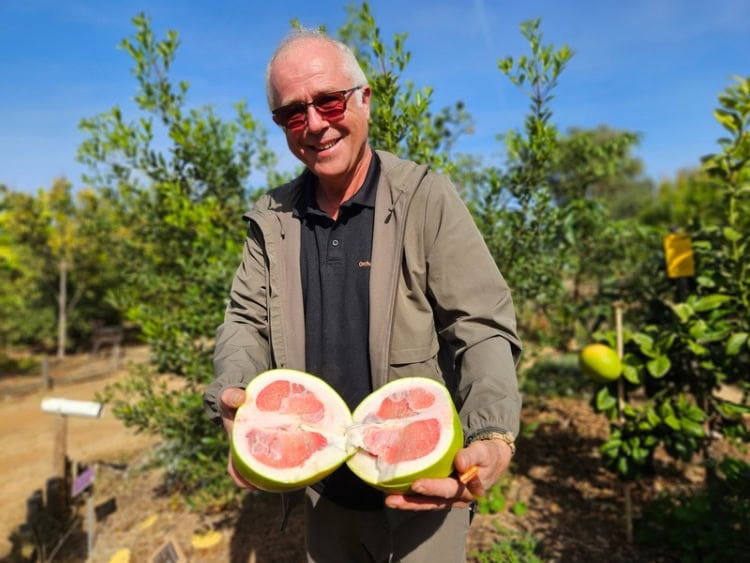
Today, this nonprofit officially accredited botanical garden shelters more than 330 species and over 500 varieties of fruit trees and perennial plants. They don’t keep their findings secret, sharing everything through hands-on workshops.
“I used to feel eco-anxious, but I realized that anxiety should lead to action rather than paralysis,” Miguel says as we walk beneath the trees.
“Instead of just complaining about climate change, we want to turn it into a question, test which trees can acclimatize here, and show a positive vision of what the future could be.”
Pomar dos Sabores is a true all-year-round edible garden, where something is always ripening no matter the season. On our way back, Miguel cuts a fresh grapefruit straight from the branch.
Carrying it over to the open-air Kiwano bar, his wife, Monique, hands it to us with a quick tip: “It’s best to eat it within ten minutes, before the flavor starts to change.”
Beside it, a long table is piled with fresh-picked pineapple guava, pomegranate, ice cream bean and stalks of sugarcane. It’s a literal rainbow of flavors waiting to be tasted.
“Our garden is also about flavors. In a supermarket you find at most 15 flavors, here, we grow 500.”
Cooking Cataplana
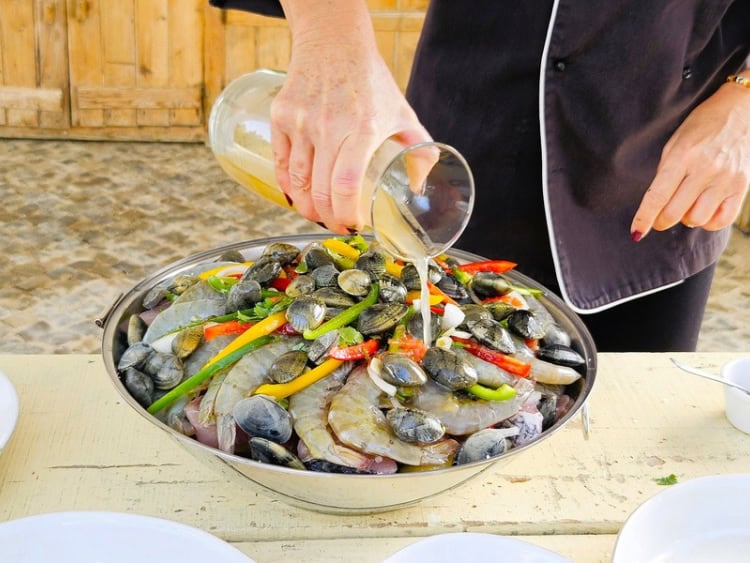
A short drive away, we trade exotic orchards for traditional Algarvian flavors at Casas da Quinta de Cima, a peaceful rural estate amid citrus groves and vineyards near Cacela.
On a sunlit terrace overlooking the gardens, local chef Sandra Patrão is ready to teach us the region’s signature dish: cataplana.
She sets out a clam-shaped copper pan, a clever hinged vessel adapted from Moorish cookware to trap steam and lock in aromas.
“The secret isn’t complicated; it’s just fresh local ingredients layered in the right order so nothing overcooks,” Sandra explains, building the base with olive oil, onions, red peppers, sliced potatoes and tomatoes.
Next come firm white Atlantic fish, prawns, and fresh Ria Formosa clams, finished with white wine and cilantro.
“Once you clamp the lid shut, the steam does all the work in 20 to 30 minutes,” she says, locking the side latches over the burner. When she unclasps the pan at the table, a cloud of fragrant, briny steam rises into the warm air, revealing a rich broth meant for soaking up with crusty rustic bread.
The Salt Pans of Castro Marim
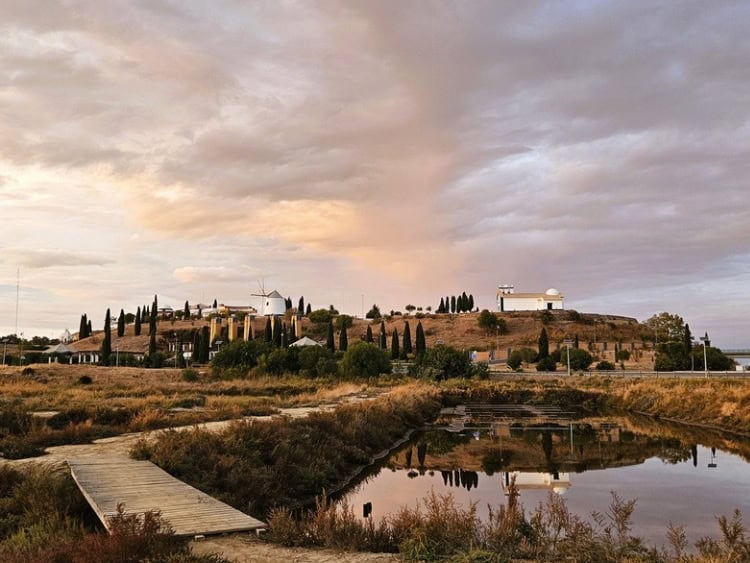
The mudflats surrounding Tavira are home to ancient salt pans spanning thousands of acres across local marshes. Artisans have harvested them by hand since Roman times.
Nearby, in the quiet border town of Castro Marim, lies Salmarim. Here, artisan salt maker Jorge Raiado welcomes us with a wide smile, leading the way down to shallow basins as the sunset slowly turns the water a deep, glowing red.
Tasting by Twilight
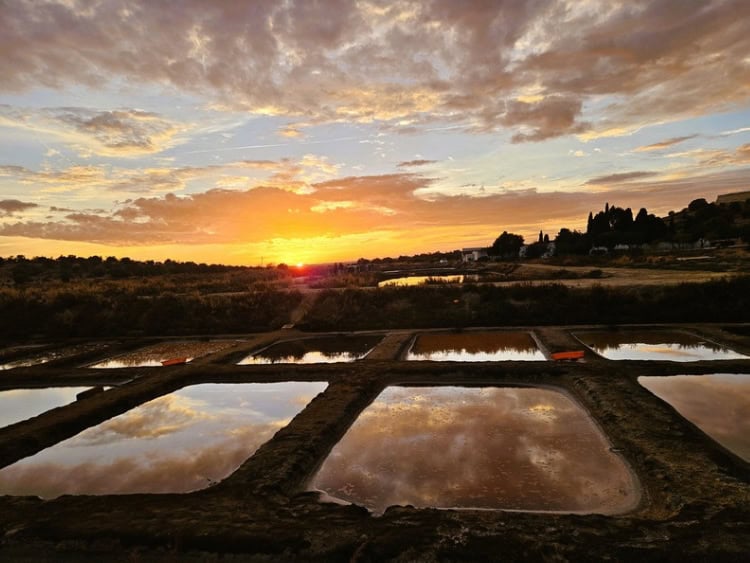
Beyond gastronomy, these shallow, mineral-rich salt pans serve as a vital haven for migratory birds. “If we don’t produce salt, birds will find a new place to nest,” notes the artisan, who actively supports the Wildlife Research and Recovery Centre (RIAS).
Armed with long wooden sticks, we try sweeping up the delicate surface crystals ourselves. As night falls, we step inside a small, dimly lit shed where Jorge expertly slices fresh Algarvian tomatoes and oranges.
We sample different artisan salts on the fruit, relying entirely on our taste buds in the fading light, a testament to how much depth a single pinch of salt can bring to the simplest local produce.
Craft Over Crowds
In the eastern Algarve, landscape and daily labor still shape each other. Whether standing beneath Tavira’s scissor-truss roofs, tasting rare fruit grown in dry soil, or watching the sunset turn the Castro Marim salt pans red, you see a region defined by nature and practical craft.
If You Go
How To Get There
Year-round, travelers can fly into Lisbon and drive three hours south or take the three-hour train to Faro. In summer, United Airlines operates seasonal nonstop flights from New York/Newark to Faro, located 30 minutes west of Tavira.
Getting Around
Tavira is easy to explore on foot, but Cacela Velha, the orchards of Luz de Tavira and the salt pans of Castro Marim are spread across the countryside, and bus connections between them are thin. A rental car lets you link them all in a single day and stop wherever the view tells you to. Compare rental cars at Faro Airport with Discover Cars.
Where To Stay
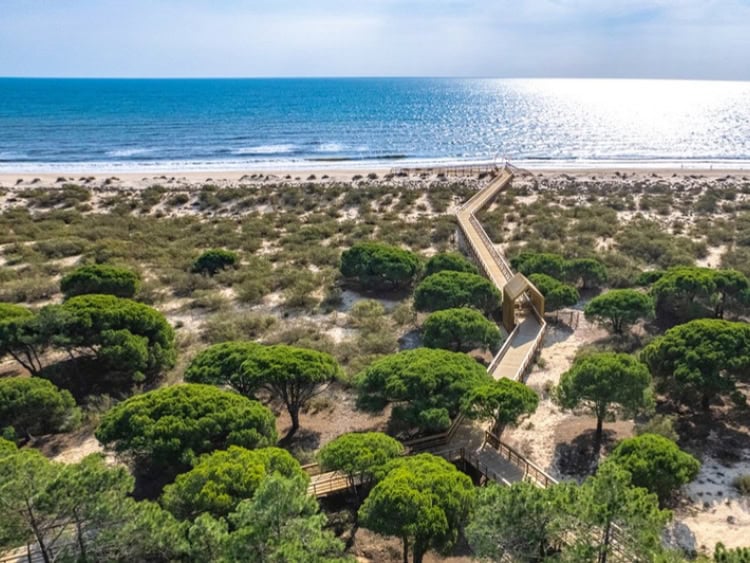
- Verdelago resort: A secluded coastal retreat set inside a pine forest on Portugal’s eastern Algarve, where wooden boardwalks lead directly to the Atlantic. Open from mid-March to mid-November, it pairs eco-designed rooms and apartments with infinity pools, a spa and delicious, locally sourced dining.
- Casas da Quinta de Cima: A tranquil countryside hideaway tucked within a working orange grove in Vila Nova de Cacela, blending restored farm buildings with contemporary comfort. It reopens for the season on March 1 and features spacious suites and an orchard-view pool just minutes from the coast.
Travel Essentials
- Protect your trip with travel insurance from SafetyWing, or compare plans from several providers on Squaremouth.
- Stay connected from the moment you land in Faro with a Portugal eSIM from Airalo.
Useful Links
Need a hand planning your trip? Here are the sites and services we rely on most, from booking tools to travel products we love.
Inspire your next adventure with our articles below:
- Portugal’s Must-Visit Destinations: From Historic Cities to the World’s Biggest Waves
- Faro, Portugal: The Algarve Gem Most Travelers Miss
Author Bio: Zuzana Zimmermannova is a globally experienced freelance journalist with a passion for storytelling, sharing her perspective across magazines, newspapers, and online publications. With a portfolio spanning more than 50 countries, she delivers compelling travel pieces, in-depth interviews, and insightful reports. Her bylines appear in Forbes, BBC Travel, GEO, Go World Travel Magazine, and other leading outlets. She loves uncovering authentic local stories through food, culture, and adventure.
Want to discover more hidden gems and helpful travel tips? Join our free newsletter for the latest travel secrets and travel articles.
We are reader-supported and may earn a commission on purchases made through links in this article.

- Exploring Portugal’s Eastern Algarve, Where Old Traditions Outlast the Crowds - November 24, 2026
- 10 Best Family-Friendly Activities in Destin, Florida - November 24, 2026
- Faro, Portugal: The Algarve Gem Most Travelers Miss - November 23, 2026
Planning another trip soon? ✈️
Add GoWorldTravel.com as a preferred source on Google. Click the button below so our local guides, packing hacks, and hidden-gem itineraries always show up first when you search!
Add to Preferred Sources