
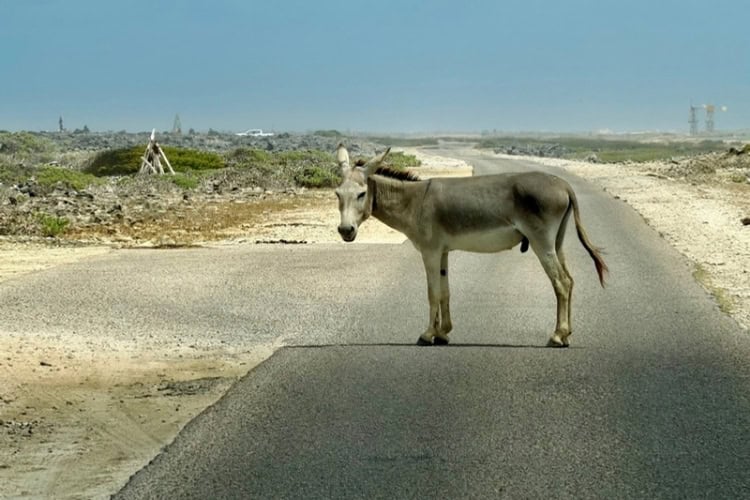
A feral donkey, wild offspring of work-donkeys imported generations back, stood crossways in the exact center of the road, stopping all traffic. Eyes half-closed, relaxed, he exuded the serenity of a Buddhist monk.
Then what we took to be his young son stepped in, head canted, mane an unruly tuft, looking madcap and scampish (yet friendly), one to fill the sugar bowl with salt. Then his mom (we think) sauntered in and all three stood there, joined by invisible forces, unconcerned with the traffic jam either side.
We got out of the car to meet them, perhaps unwisely, and they stood there cordially until casually hoofing onward. Could we not bring them home with us? Here, “Everything is poko poko” (slow slow), including donkeys. And perhaps that is the first thing to know about Bonaire.
Bonaire At A Glance
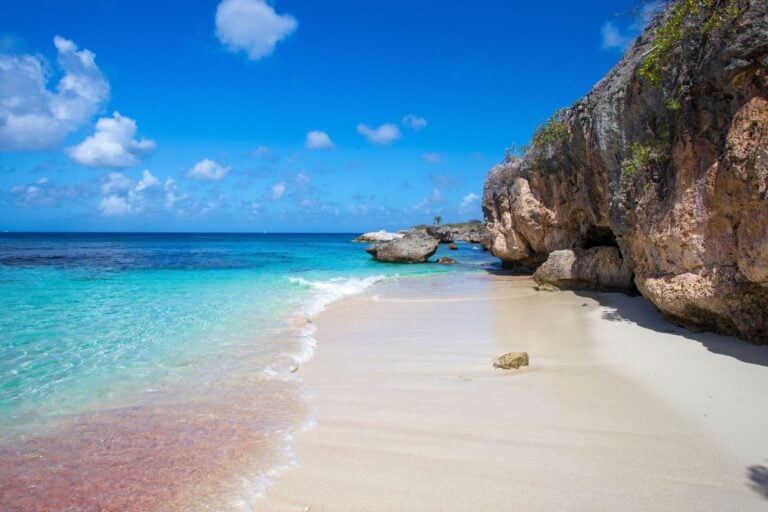
One of the ABC islands, along with Aruba and Curaçao, Bonaire is a special municipality of the Netherlands, 50 miles off the coast of Venezuela. About 25,000 people call it home, most of them Dutch citizens, both native and transplanted.
Semi-arid and outside the hurricane belt, it’s warm but comfortable, thanks to constant trade winds. Known for some of the world’s best snorkeling and diving, Bonaire lets you walk off the island’s edge directly into an exotic subaqueous world.
Now swaddled by a thick layer of luxe in spots, much of its earlier self remains: restaurants and bars open to the outside, shoulderless wrinkled roads, buildings a little more scruffed than buffed.
Roosters, wild goats, somebody’s sheep, chubby iguanas and innumerable parrots and parakeets in the trees make a prodigious clack. Also pink flamingos, shaped like treble clefs, so elegant we trembled in awe.
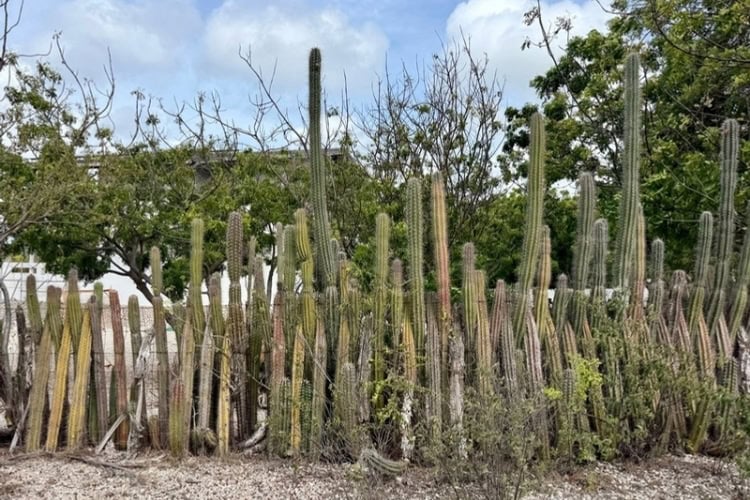
Many of the roads, and many of the homes beside the roads, are fenced by cactus, often hundreds of them standing shoulder to shoulder. Taking decades to grow, there are two types, Kadushi (sweet), and Yatu (not).
The fences are made from Yatu. If they used kadushi, the wild goats would eat them. Water for cacti is kryptonite.
Bonaire’s Cuisine
Food on the island is equal to its splendor. What we ate fell into two camps: grand cuisine and cuisine grand-mère, granny’s cooking.
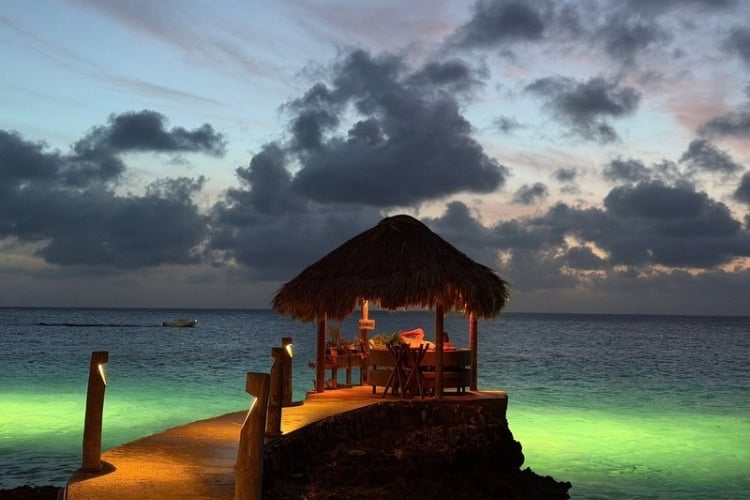
Our first evening, shunning kadushi, we ate dinner late at Ingridients, part of Buddy Dive Resort. We sat under an awning, open on all sides, at the sea’s edge. Large luminous blue dots slowly moved within it, snorkelers night-diving.
We ate fresh-caught wahoo ceviche and marlin tataki, much like a carpaccio, smoked in a glass cloche that was dramatically lifted tableside.
There are many isotopes of love, perhaps Romance most ephemeral among them. But it was robust at Biña in the Chogogo Dive & Beach Resort (with its own float-river), under a soaring tentlike awning.
A sharp, bright moon, slim as a fingernail clipping, slowly set in tandem with its bright friend Venus; we supped only inches from the sea.
We ordered their cold seafood tower, including conch and whelk, sea snails (like abalone), which were so good. We requested our entrecote cooked between medium rare and medium, and they got it just right, medium rare with a bump. Only a keen kitchen could have pulled it off.
Bonaire’s Poshest
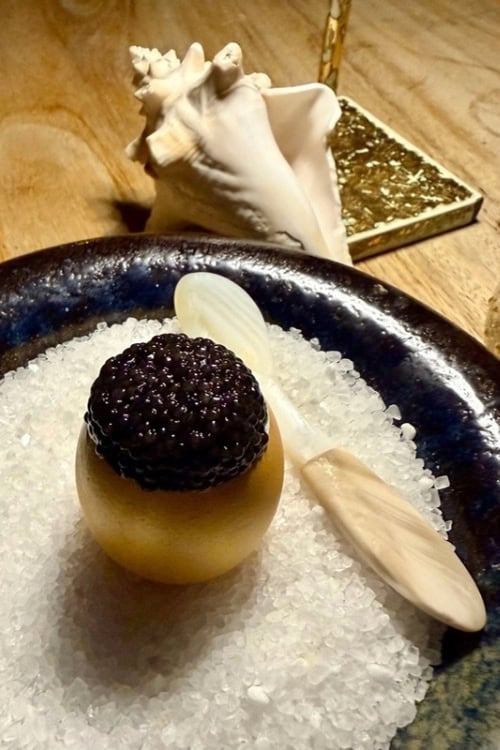
Our poshest culinary experience was at The Brass Boer, an al fresco restaurant, stunningly designed and so close to the surging sea that its spume misted over. Though Michelin does not visit Bonaire, the food is strongly influenced by their sibling three-star restaurant, De Librije, in the Netherlands.
A signature dish was a gold-gilded eggshell, crown lifted, egg removed, then restored as custard, with sour cream, crunchy nubbins of potato and a bonnet of Imperial Heritage caviar. Hewing to tradition, we ate it with an ivory spoon. Food for czars and czarinas.
Another was warm bread (brioche) and butter. But the butter was browned into a beurre noisette, with its heady aroma, umami’d with wild mushroom powder (ceps, to be exact), and recongealed. We would have been content simply eating this for our entire meal.
Farm-To-Table Bonaire
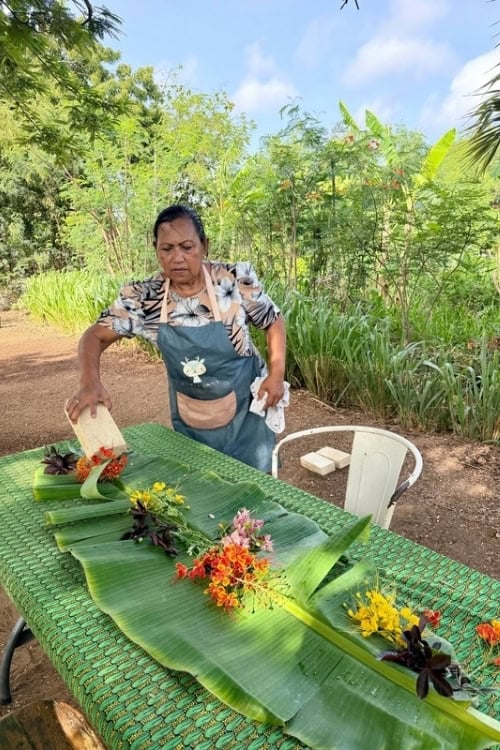
Nature Cooking School Bonaire sits off-piste, a farm alive with roosters, hens, chicks and a drift of cats. We sat at a table strewn with flowers from their extensive gardens, under the spreading branches of a tamarind tree, tamarind pods dangling down.
Chef Rositta Bakri, whose love language is food, barraged us with her homegrown cuisine. We enjoyed pumpkin pancakes, linzen (lentil) pancakes, chicken cutlets (their own chicken, of course), cassava-pineapple pudding, bread pudding and pumpkin soup.
In addition was a blue drink made from butterfly pea, and, presiding over all, fresh-squeezed passionfruit juice which unhinged us with its sheer deliciousness, astronomically better than any mere processed version.
Also off track, under Maiky Snack’s awning, we lunched on goat stew onto which we spooned an incendiary onion-pepper relish. Open only on weekends, the parking lot overflowing, it seemed half the island was there.
Cold, beaded Heinekens were mandatory. Out back, separated from diners by a simple mesh fence, kids cavorted (young goats) from which our lunch derived. Real deal farm-to-table.
Stopping at nearby Cadushy Distillery, we tried Cadushy of Bonaire Liqueur, bright green like crème de menthe, but made from the dried skins of the kadushi cactus.
They dry the skins as quickly as possible, placing them behind the windshield of a car parked under the tropic sun. Poko poko.
Salt, Sea and Poko Poko
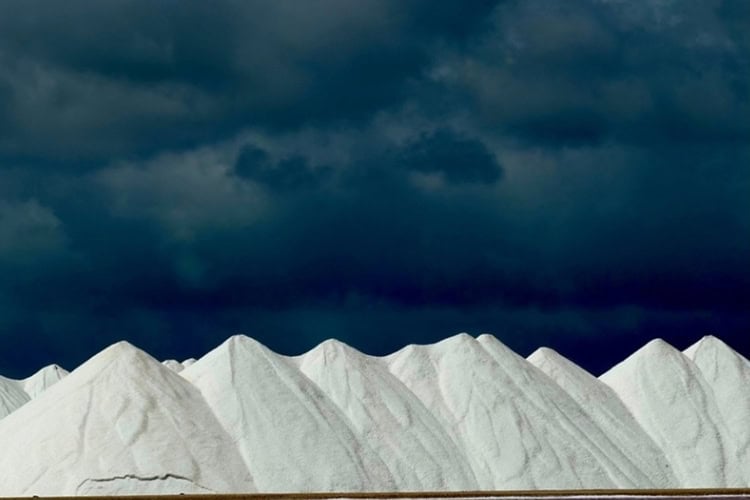
We drove as much of the island’s perimeter as there were roads to do so. Bonaire’s saltworks are stunning, and if you’d rather leave the driving to someone else, this small-group island tour stops at the Salt Pier, the flamingo sanctuary and the old slave huts.
These are large sections of land, shallowed like cookie sheets, into which ocean water flows and concentrates in the sun. Each section of water is pumped into the next, steadily concentrating.
The penultimate saline section is pink. Then the next is salt itself, literal mountains of salt, which are conveyor-belted directly into waiting ships. Made poko poko, these pure-white mountains, lit by sunlight and shadowed by the swift-moving clouds above, were an Ansel Adams composition.
Snorkeling Klein Bonaire
A fork-tailed frigate bird soared overhead. Aside from landing in order to mate and raise its chicks, they spend their entire life in flight.
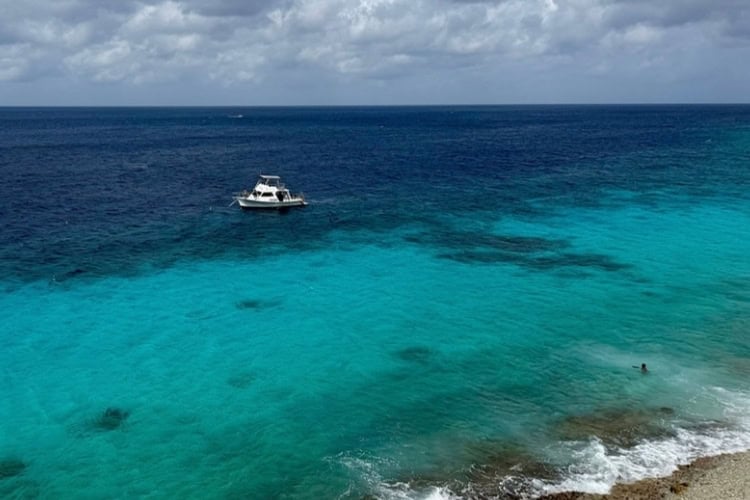
We were on board Aqua Fun’s speedboat, headed out on this small-group snorkeling trip to Klein (Little) Bonaire, uninhabited but for turtles who lay their eggs there. Flying fish, fast as darts, fins outspread like wings, skimmed by inches above the water.
We moored, draped ourselves over life jackets for buoyancy, and float-snorkeled, mainly letting the current carry us, masks down to peer into Earth’s other world.
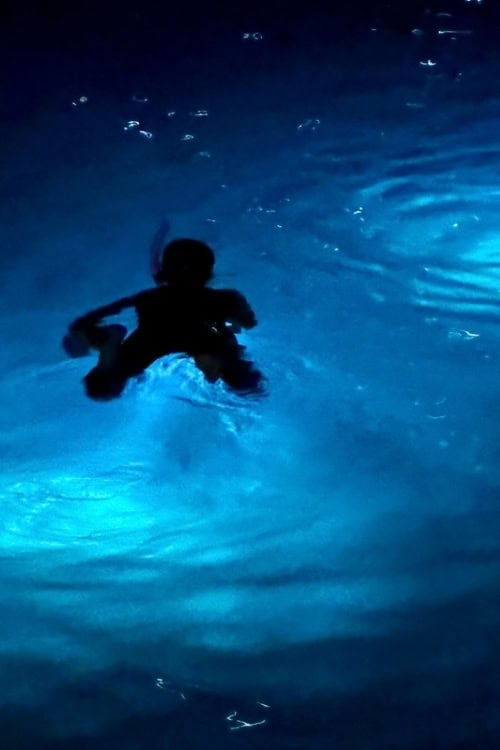
An actual squad of squids squidding in exact formation came into view. It was as though they were communicating with one another. We also saw an elongated Trumpetfish, like a long manicotti, mosey past.
Smooth Trunkfish, polka-dotted and shaped rather like children’s milk cartons, were nibbling. And numerous four-eyed butterflyfish, high-voltage blue. Vastly better than a visit to the aquarium, this was a visit within it.
If you’re inspired to explore more marine wonders, see 9 Places to Experience Amazing Sea Life Up Close.
Staying At Bamboo Bonaire
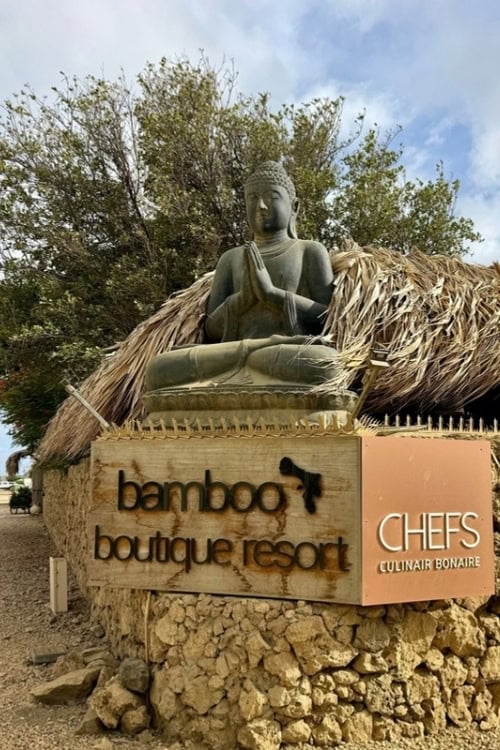
We stayed at Bamboo Bonaire, a property we highly recommend. It is a secluded compound of small cottages decorated in an eclectic blend of Buddhist, Tiki and Moroccan styles that somehow harmonize beautifully.
Outside our front door, a hammock was slung between two palms, à la Gilligan’s Island.
Our large room was handsome, though not fancy. Outside, under awnings of corrugated metal and hula-skirt straw, was the water closet, twin showers, hot tub and a large bed under its own straw canopy for sleep or amour.
Coconut palms sprouted through apertures in the awning. Showering outside, in balmy weather, made us balmy with pleasure.
Guarded by Shiva, a vigilant housecat, and a property rife with musical fountains, the most adorable swimming pool, and a spa, this is not a hotel for those seeking turndown service, but for those seeking Bonaire’s melodic line. Its restaurant, CHEF’s Bonaire, which must be booked months ahead of time, is said by some to be the island’s best.
Book your stay at Bamboo Bonaire here.
Bonaire’s Dark History
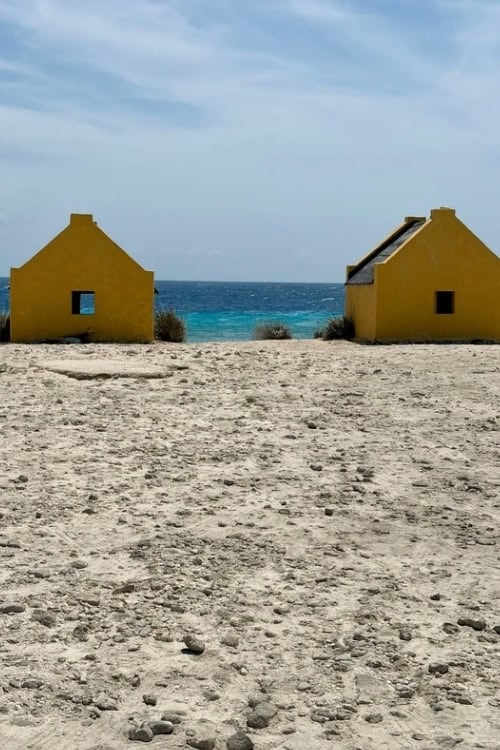
There are dark sedimentary layers to Bonaire’s history. The Spanish enslaved the local population in the 16th century, brutally succeeded by the Dutch, who brought in African slaves in the 17th century.
Minuscule shelters made from coral stone were built for them right by the salt flats. We saw an entire roofless encampment of such buildings, barely eroded. Slavery ended in 1863, and many slave descendants still live in Rincon.
Our last evening, pinkies grazing, we watched the vermilion sun sink, poko poko, into the ocean. Driving home we passed a quartet of donkeys standing companionably by the side of the road, content in each other’s company.
For more, read The Gentle Art of Doing Nothing Isn’t Easy in Providenciales,Turks and Caicos.
If You Go
U.S. flights to and from Bonaire operate only on certain days of the week. Airlines include United, Delta, American, and JetBlue. KLM offers daily direct flights to and from Amsterdam, while TUI Fly Netherlands currently operates three direct flights a week from Amsterdam and two returning, with service increasing next April.
Bonaire can be visited year-round, thanks to its warm climate and location outside the hurricane belt, though the dry season is generally February through June. We visited in mid-August and felt the weather was ideal. We rented a car at the airport, which was enormously helpful for exploring the island. All the major rental-car brands are represented.
Tap water is completely drinkable (filtered from a desalination plant). Bring reef-friendly sunscreen.
Need a hand planning your trip? Here are the sites and services we rely on most, from booking tools to travel products we love.
Inspire your next adventure with our articles below:
- Shipwrecks, Sea Turtles and a Civil War Fort: A Seaplane Day Trip to Dry Tortugas
- Seychelles Travel Guide: Best Islands, Top Stays and How to Get Around
Author Bio: After five years in Hong Kong, where we started writing restaurant reviews, we returned to our home in Oregon. From here we branched outward – locally, nationally, and internationally – to write articles about all things travel related. We’ve written about extraordinary hotels, stargazing in Eastern Oregon, Vancouver BC restaurants, Rome, Mumbai, an oyster farm, a wasabi farm, ziplining, local chow, and so much more. Our steering stars are food, not fashion, the real-deal, not razzle-dazzle, what’s marvelous, not mundane.
Want to discover more hidden gems and helpful travel tips? Join our free newsletter for the latest travel secrets and travel articles.
We are reader-supported and may earn a commission on purchases made through links in this article.

Planning another trip soon? ✈️
Add GoWorldTravel.com as a preferred source on Google. Click the button below so our local guides, packing hacks, and hidden-gem itineraries always show up first when you search!
Add to Preferred Sources