


Most travelers dutifully check off museums such as the Louvre, the Met and the British Museum from their cultural bucket lists. But scattered across the globe, there is a parallel universe of museums that celebrate the peculiar, the overlooked, and the downright bizarre.
These unconventional institutions prove that humanity’s urge to collect and display knows no bounds, whether the subject is toilets, vintage dog collars, or parasites preserved in jars.
From underwater sculpture gardens off the coast of Mexico to a toilet museum in New Delhi, these quirky collections offer more than novelty value. They reveal unexpected stories about human creativity, history and our relationship with everything from condiments to canines.
Whether you’re seeking a break from traditional tourism or simply curious about the stranger corners of our world, these museums deliver experiences you won’t find in any conventional guidebook.
The Mustard Museum

Speaking of flavors, have you ever tasted mustard enhanced with chocolate, blue cheese or tequila? If not, you’ve probably never been to the National Mustard Museum at Middleton, Wisconsin.
Visitors are introduced to some 6,000+ mustards from all 50 U.S. states and more than 70 countries.
They learn about the uses of mustard as medicine, and have the opportunity to sample hundreds of mustards at a tasting bar.
Staff members sing “Roll out the Mustard” and recite passages from Shakespeare which refer to the “King of Condiments.” No wonder the museum is listed on the National Registry of Hysterical Places.
Admission is free, and the museum is open daily from 10 am to 5 pm (closed on New Year’s Day, Easter Sunday, Thanksgiving, and Christmas).
Plan your visit or check out their collection on their official website: National Mustard Museum
The Pigeon Museum
This quirky museum in Oklahoma City celebrates the relationship between man and the pigeon — once known to some as the “flying rat.” Admission is free (though donations are appreciated).
Originally formed in 1973 as the American Homing Pigeon Institute (AHPI), the museum later purchased 10 acres in 1993 for the World of Wings and APM&L complex. In January 2014, the museum moved into a new, larger facility that offers more space for its collections.
Inside, you’ll find several permanent exhibits:
- Homing & Fancy Pigeons — showcasing different breeds.
- War History — detailing how pigeons carried messages during WWI and WWII.
- Pigeon Racing — featuring racing clocks, trophies, and a look at the sport’s development.
- Passenger Pigeon Exhibit — “A Shadow Over the Earth” tells the tragic story of the passenger pigeon’s extinction.
- Project Sea Hunt — an exhibit on pigeons used by the U.S. Coast Guard.
The museum also maintains a World of Wings aviary, where, weather permitting, you can see 12 different pigeon breeds indoors.
Learn more on their official website: The American Pigeon Museum & Library
The Witchcraft & Magic Museum
For example, folks in England who like to delve into the occult may scare up some fun at the Museum of Witchcraft and Magic in Cornwall.
There, they can explore the history of magical practices from ancient times to the present. Images on a pewter goblet recall legends of a goddess-like figure, a magical enchantress and a megalomaniacal witch.
Among the rather gruesome contents of a Haitian “magical box” are a dried toad and a rabbit’s head, and a figure with a bird’s skull, which is bound in human hair.
Among occasional events offered at the museum are plays, magic walks and, of course, special Halloween events.
Learn more on their official website: Museum of Witchcraft and Magic
The Dog Collar Museum
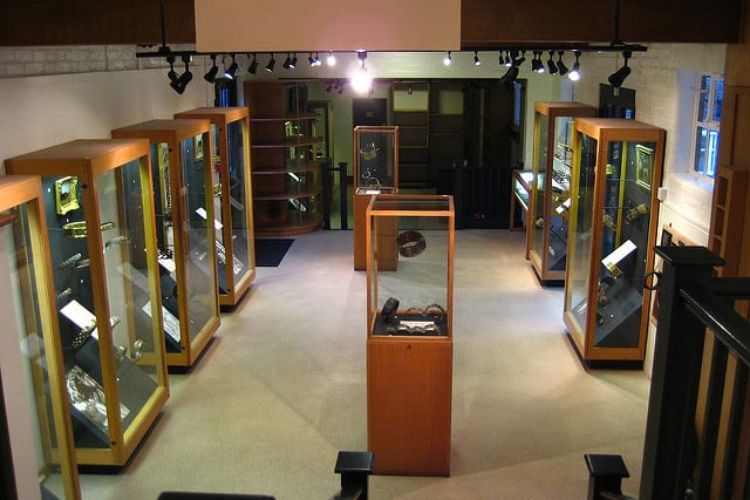
It takes no magic to figure out what’s on display at the Dog Collar Museum, housed in a castle in Kent, England. The canine neckwear spans five centuries from Medieval to Victorian times.
Thick iron collars covered with sharp spikes were used during the 15th to 17th centuries when Europe’s forests teemed with dangerous predators that were happy to rip out the throat of any hunting dog that entered their territory.
They contrast with delicate, ornate canine neckwear made of silver, fine leather and velvet, sometimes decorated with the coat of arms of royal owners.
A sense of humor prompted the engraving on an 18th-century brass collar, which states: “I am Mr. Pratt’s dog. Whose dog are you?”
Animals in a different form grace the somewhat creepy Museum of Osteology, which brings to life (pun intended) the branch of anatomy that deals with bones.
The museum branch in Oklahoma is home to nearly 300 skeletons, ranging in size from tiny mice to a 40-foot-long humpback whale.
Learn more on their official website: Dog Collar Museum
The Parasite Museum
Much smaller life forms are under the microscope (so to speak) at the Meguro Parasitological Museum in Tokyo.
In addition to operating as a research and educational facility, the establishment maintains a collection of some 60,000 parasite specimens, some of which are on public display. Exhibit themes include parasite diversity and parasites that affect humans, including those transmitted from animals.
Visitors with a true penchant for parasites may wish to stop by the gift shop to browse among T-shirts, cloth shopping bags, magnets, and other items decorated with — you guessed it — images of parasites.
Learn more on their official website: Meguro Parasitological Museum
The Toilet Museum
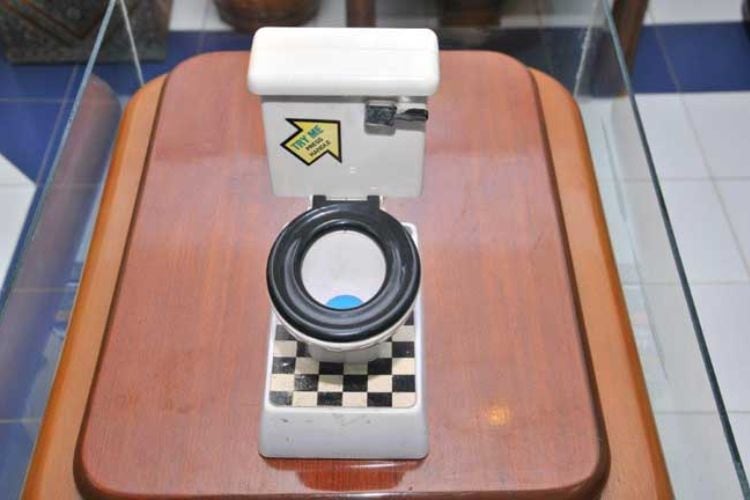
Photo by the Sulabh International Museum of Toilets
From parasites to potties seems like a natural progression, so next we’ll visit the Sulabh International Museum of Toilets in New Delhi, India.
It details the evolution of toilets from 2,500 BC to the present. Exhibits include ornately carved and painted urinals and commodes, and introduce viewers to gold and silver toilet pots.
These were used by the Roman emperors, and a very early flush pot, which was devised in 1596 by a courtier of Queen Elizabeth I.
In a nod to gentility, the collection features poems about toilets and their use. Furthermore, this museum is not mere flush-in-the-pan.
It makes the rather grandiose claim that among its objectives are providing information to researchers, manufacturers and sanitation policymakers.
Learn more on their official website: Sulabh International Museum of Toilets
The Underwater Sculptures Museum

People who wish to view the sculptures underwater should visit the Museo Subacuatico de Arte (MUSA) near Cancun, Mexico. This unusual museum combines art with science.
Underwater sculptures at both locations delight those who admire them while diving, snorkeling, or viewing them from a boat. In addition to being a fun attraction, they also create artificial reefs, which help to protect the marine environment.
The Mexican underwater gallery includes more than 500 statues submerged between 10 and 20 feet at three locations.
Among the works are the Dream Collector, the Promise, Thing Blue (a Volkswagen automobile) and six businessmen with their heads buried in the sand.
Silent Evolution, the major installation, includes some 450 sculptures that show people interacting with their environment in both positive and negative ways.
Each statue resembles a member of the local village where the sculptor lives, including a young boy, a nun and a fisherman.
Learn more on their official website: Museo Subacuatico de Arte
The Museum of Bad Art
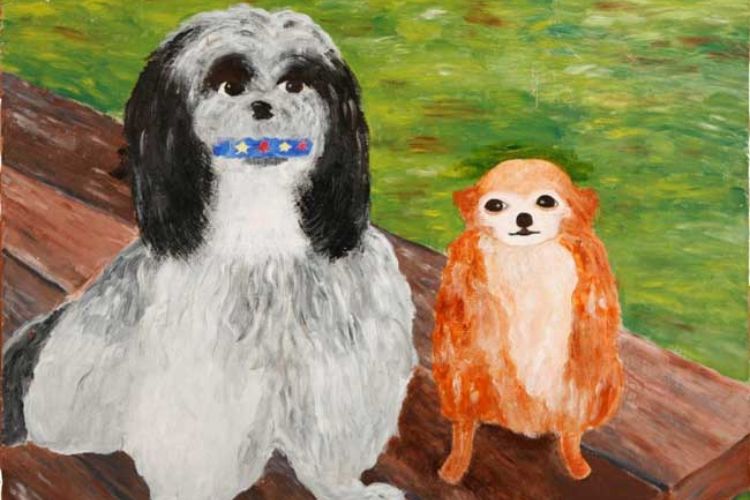
Art follows a different path at a museum that brags that it’s the only one “dedicated to the collection, preservation, exhibition and celebration of bad art.”
The stated goal of the Museum of Bad Art in Boston (MOBA) is “to bring the worst of art to the widest of audiences.”
Each piece in the collection is presented with an appropriate description.
For example, the Blue Mushroom Man has toadstools sprouting out of the top of his head, while the aptly named Woman Riding Crustacean depicts “a blow-up doll riding a giant lobster.”
Learn more on their official website: Museum of Bad Art
The Mountain Museum
Mother Nature gets into the art scene at the Messner Mountain Museum, a network of six locations across northern Italy created by renowned climber Reinhold Messner. Each museum combines dramatic alpine scenery with themes inspired by its setting, exploring humanity’s long and evolving relationship with the mountains.
One museum focuses on myths tied to mountain cultures, while another tells the story of mountain peoples throughout history. The structure perched atop 7,500-foot-tall Mount Kronplatz is dedicated to traditional mountaineering, its striking architecture offering views as compelling as the exhibits inside.
The Museum in the Clouds on Monte Rite, set within a glass-walled panoramic pavilion, is worth visiting for the vistas alone. Adding to its appeal is a collection of artworks depicting the Dolomites over the past two centuries.
Learn more on their official website: Messner Mountain Museum
Need a hand planning your trip? Here are the sites and services we rely on most, from booking tools to travel products we love.
Inspire your next adventure with our articles below:
- Not The Met or MoMA – Check Out These Lesser-Visited Cool NYC Museums
- Europe’s 12 Most Interesting Museums: From Underground Salt Mines to Chocolate Fountains
Author Bio: After gallivanting throughout the United States and to more than 75 other countries around the world, and writing about what he sees, does and learns, Victor Block retains the travel bug. He firmly believes that travel is the best possible education, and claims he still has a lot to learn. He loves to explore new destinations and cultures, and his stories about them have won a number of writing awards.
Want to discover more hidden gems and helpful travel tips? Join our free newsletter for the latest travel secrets and travel articles.
We are reader-supported and may earn a commission on purchases made through links in this article.

- Language Learning Travel Guide - September 12, 2026
- Safari Travel Guide - September 12, 2026
- Luxembourg City in 24 Hours: Essential Sights, Views and Cafés - September 12, 2026
Planning another trip soon? ✈️
Add GoWorldTravel.com as a preferred source on Google. Click the button below so our local guides, packing hacks, and hidden-gem itineraries always show up first when you search!
Add to Preferred Sources