
My teenage granddaughter, Violet, and I zeroed in on the perfect area. She itched to become a marine biologist and wanted to study glaciers, so we headed for the Anchorage/Seward area in Alaska because we could get relatively close to the glaciers there.
Violet and I set out in July. That was a perfect choice, too. The weather was in the 50s and 60s. It rained the first few days, but the sun warmed us in the last days of our visit.
Anchorage Science And Culture
Our first outing in Anchorage was to the Campbell Creek Science Center. The center introduced us to the glaciers and to Alaska’s public lands and natural resources. It was a good place to start, especially since it gave us an idea of the vastness of our 49th state.
Violet remarked, “I can’t believe that Alaska is 2 ½ times the size of Texas but contains fewer people than Los Angeles.”
We learned so much about the animals at the center that it was hard to pull her away, but we were there to learn about glaciers firsthand. “Yes, we need to go,” she said, “but what’s scary is that a wolf can eat 20 pounds of food in one sitting.”
That settled it. We needed to spend time studying the animals and the Native people, too, so we visited Anchorage’s Alaska Native Heritage Center.
It shares the heritage of Alaska’s 11 major cultural groups. We happened upon members of the Yupik tribe performing their tribal dance.
Then we wandered through the Yupik sweat lodge and dwellings, where Violet observed, “How interesting that they pass names on when an elder dies so the next generation can be guided by the spirit of that elder.”
Her intrigue with the culture validated that she would find the glaciers equally fascinating, so we journeyed on.
Turnagain Arm Train Ride
We booked a train ride along the shorelines of Turnagain Arm, a waterway in the northwestern part of the Gulf of Alaska. It is one of two narrow branches at the north end of Cook Inlet.
The view from the train intrigued us. Emerald green fields sloped from the heights of the Chugach Mountains, striped with cottony white snow. Powder blue glaciers peeked out from behind that snow.
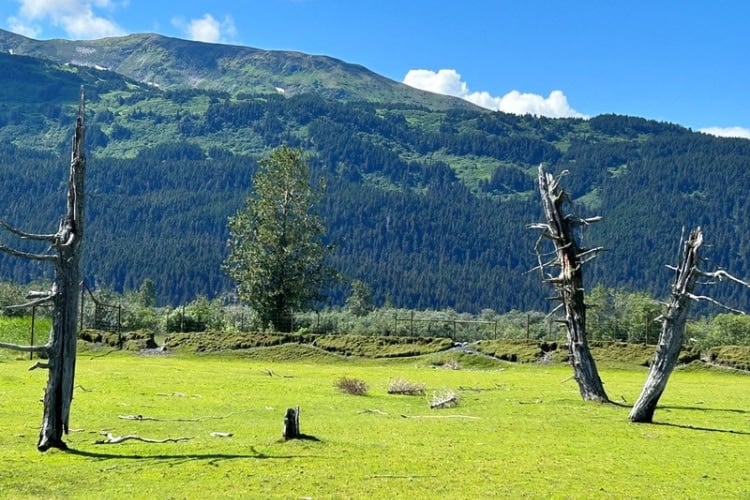
Verdant growth was abundant on those fields—except when it wasn’t: ghost forests abounded. When the 1964 earthquake created tidal waves, saltwater killed the trees. That soil provided little nourishment, so skeletal trees covered much of the horizon.
Spencer Glacier Rafting
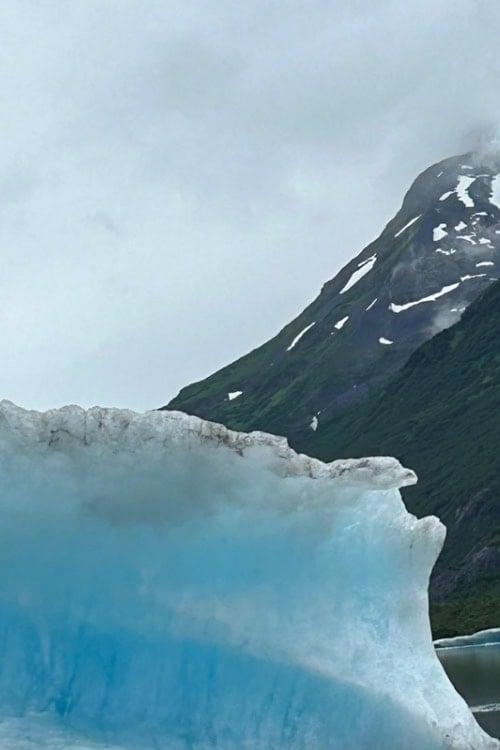
We disembarked the train to drive to Spencer Glacier, our first chance to view a glacier up close. Carving an ancient path through Chugach National Forest, Spencer Glacier towers over iceberg-studded Spencer Lake and the surrounding recreational area.
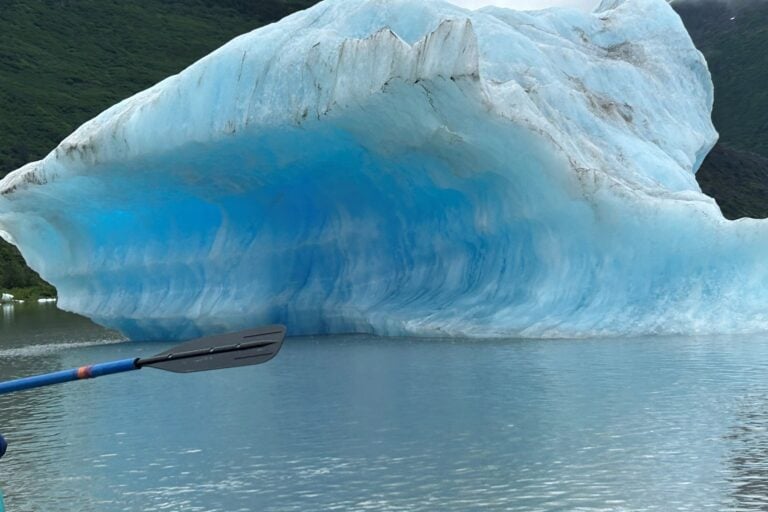
Wanting to get as close as we could to the glacier, we drifted in inflatable rafts for seven miles down the Placer River. Dusty blue icebergs from Spencer Glacier encircled us as we paddled.
They were within reach and encased us in an otherworldly experience that’s now etched in my memory. They felt like sheets of powder blue taffeta wafting alongside our raft.
“Icebergs are blue because they have little oxygen and are so dense that other colors aren’t absorbed. Just blue light passes through,” stated Violet as we immersed ourselves in the sci-fi delight of floating among the ethereal, wraithlike ghosts.
An additional thrill was retrieving a piece of the glacier from the water and actually holding this piece of antiquity. This one-day outing near Anchorage made for an exhilarating excursion.
Journey To Seward
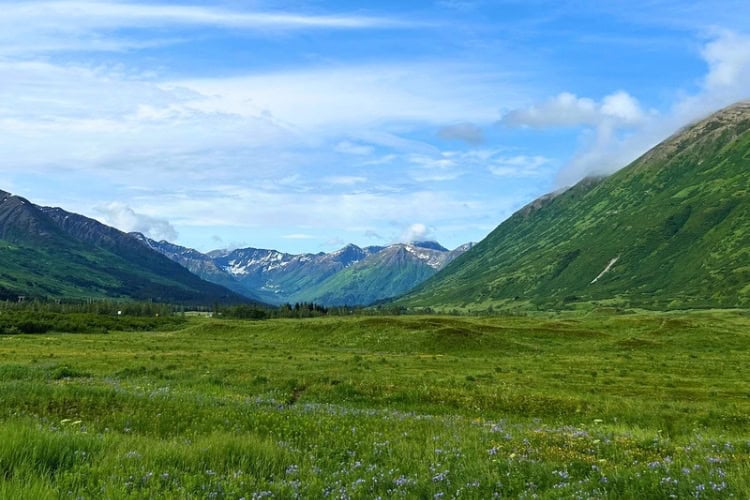
We wanted to try to get even closer to glaciers, so we took a bus ride from Anchorage past glaciers perched high up on the mountaintops. Our destination was Seward, where we were going to stay for several days.
We took in the bountiful rivers and lakes of the Kenai Peninsula as we traveled the coast of Southcentral Alaska.
Exit Glacier In Seward
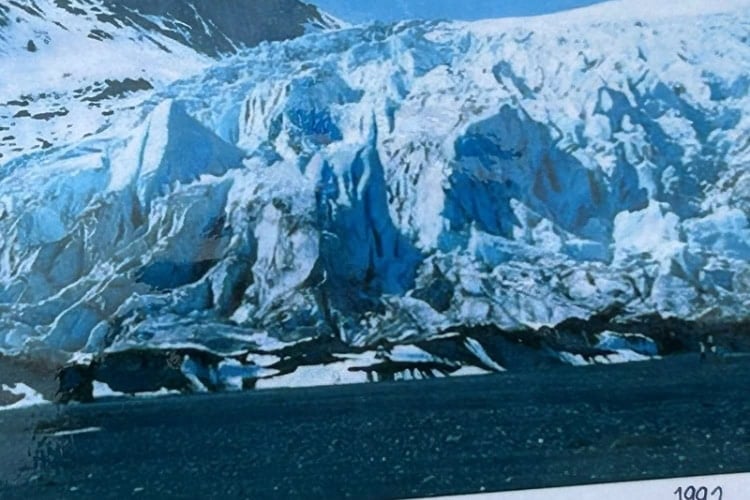
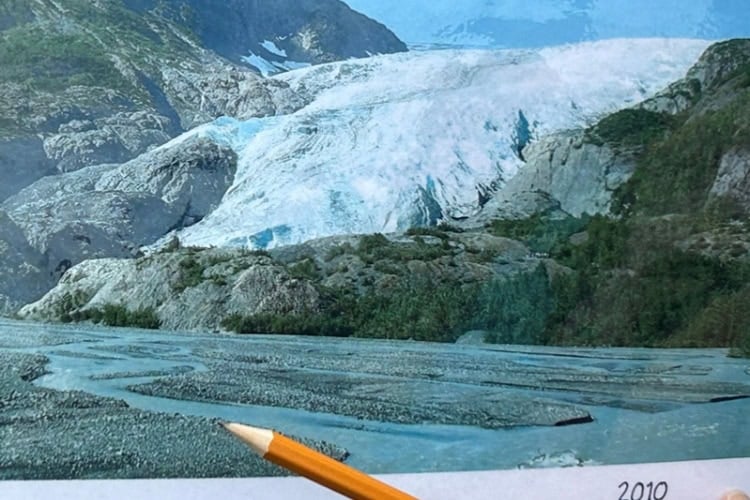
Soon, we came upon one of the most accessible valley glaciers in Alaska—Exit Glacier. We were able to walk a short distance very close to Exit Glacier.
It is a visible indicator of glacial recession due to climate change. We stood where the glaciers had receded years before and discovered that Exit Glacier retreats 11 inches a day. That certainly fascinated my soon-to-be biologist.
Iditaride And Wildlife
Then we determined it was time to experience a little of Alaska’s culture, and what could be more fun than an Iditarod ride? So we set out to find the summertime version of the Iditarod.
Eight sets of dogs lead a dogsled on a fast-paced two-mile Iditaride. Violet loved the fast-paced ride, giving her an idea of the Iditarod, which covers almost 1,000 miles of rugged terrain.
Its speedway is from Anchorage to Nome from Monday, March 3, 2025 – to Monday, March 17, 2025 this year.
The Iditaride handlers encouraged us to play with the Husky puppies after the Iditaride, and that gave us the inclination to see more animals.
We enjoyed visiting the Alaska Wildlife Conservation Center to see bison, musk ox, bears, moose, elk, reindeer, and wolves. The center is a sprawling sanctuary dedicated to preserving Alaska’s wildlife.
Kenai Fjords Boat Tour
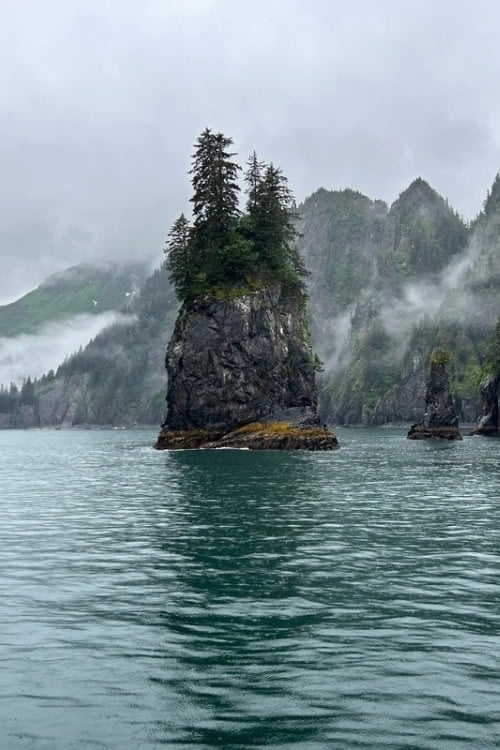
Back to the glaciers: we embarked on a six-hour fjord tour in Seward’s Resurrection Bay. It was a stunning opportunity on the Kenai Peninsula.
We passed the Barrier Islands and explored Kenai Fjords National Park to discover Holgate Glacier. Though it’s a small glacier, it’s the best opportunity to see a glacier calving.
“What a special opportunity,” said Violet as we saw waterfalls, puffins, porpoises, sea otters, humpback whales, and cliffs plastered with sea lions and seagulls.
On our boat, we sipped juice made cold with 400-year-old glacier ice. Violet, with her grasp of scientific knowledge, explained that the gray whales were bubble feeding when we saw them.
They circle the fish, entrapping them, and feast on those inside the bubble.
This Kenai Fjords National Park Glacier & Wildlife Tour runs six hours through Resurrection Bay with a naturalist on board, lunch included, and reliable stops near active calving glaciers and wildlife-rich waters.
Alaska SeaLife Center Overnight
Seward’s Alaska SeaLife Center called to us next. It’s Alaska’s only permanent marine mammal rehabilitation facility.
They hold overnights for students, so Violet joined one. Naturalists lectured the students on cephalopods and luminescence, and they invited students to dissect squids.
The students had free rein of much of the aquarium and spent lots of time watching the sea lions and puffins when their hands weren’t submerged in the live tank.
“It was so light out at night that it brought home the message that it’s light out almost 24 hours a day in Alaska during summer.”
Tastes Of Alaska
We had tastes of bison and reindeer meatloaf and sausage. Violet enjoyed Spruce Tip soda, unique to Alaska because it’s sourced from Spruce trees.
She found the whole trip intriguing and wants to return. Visitors can kayak, hike, camp, and soak up only-in-Alaska natural splendor. We’ll do that—and explore more glaciers.
If You Go
In Anchorage: The Campbell Creek Science Center (5600 Science Center Dr.) offers a strong introduction to Alaska’s public lands, wildlife, and glacial geography. The Alaska Native Heritage Center (8800 Heritage Center Dr.) shares the living traditions of Alaska’s 11 major cultural groups, including dance performances and traditional dwellings.
Glacier Experiences: The Alaska Railroad runs scenic service along Turnagain Arm toward Spencer Glacier — a striking introduction to the Chugach range before you get close to the ice. At Spencer Glacier, raft trips down the Placer River put you among floating blue icebergs in Chugach National Forest. Exit Glacier, just outside Seward, is one of the most accessible valley glaciers in the state and offers short walks to the ice margin. For Holgate Glacier, the classic approach is a full-day boat tour through Resurrection Bay. Book the Kenai Fjords National Park Glacier & Wildlife Tour on Viator for a six-hour cruise with wildlife spotting and lunch included.
Wildlife: The Alaska Wildlife Conservation Center (43520 Seward Hwy, Girdwood) is a sprawling sanctuary where you can see bison, musk ox, bears, moose, and wolves. In Seward, the Alaska SeaLife Center (301 Railway Ave.) is the state’s only permanent marine mammal rehabilitation facility and offers overnight programs for students.
Dog Sledding: The summertime sled dog experience in Seward runs on wheeled sleds through wilderness trails, with kennel tours and husky puppy time included. Book the Wilderness Dog Sled Ride and Tour on Viator.
Food and Drink: Look for bison and reindeer meatloaf and sausage at local spots around Seward and Girdwood. Spruce Tip soda, made from Sitka spruce tips, is a uniquely Alaskan find worth trying. On fjords boat tours out of Resurrection Bay, drinks chilled with glacier ice are a highlight.
Need a hand planning your trip? Here are the sites and services we rely on most, from booking tools to travel products we love.
Inspire your next adventure with our articles below:
- Alaska History and Native Cultures Come Alive at These Anchorage Museums
- Alaska’s Katmai National Park, Where Bears and Volcanoes Take Centerstage
Author Bio: Marcia McGreevy Lewis (she/her) lives in Seattle and is a retired feature writer for a Washington newspaper. She enjoys committing her adventures to writing for literary journals, magazines, travel sites, and books. Reach her on Facebook and Instagram/Threads, Twitter, Bluesky, and LinkedIn.
Want to discover more hidden gems and helpful travel tips? Join our free newsletter for the latest travel secrets and travel articles.
We are reader-supported and may earn a commission on purchases made through links in this article.

- Winter in Michigan’s Keweenaw Peninsula: Sled Dogs, Saunas and Snowshoe Trails - October 27, 2026
- Love Across Borders: 8 Expert Tips for International Dating Success - October 27, 2026
- The Ecuador Amazon Lodge That Actually Lives Up to the Ecotourism Label - October 27, 2026
Planning another trip soon? ✈️
Add GoWorldTravel.com as a preferred source on Google. Click the button below so our local guides, packing hacks, and hidden-gem itineraries always show up first when you search!
Add to Preferred Sources