
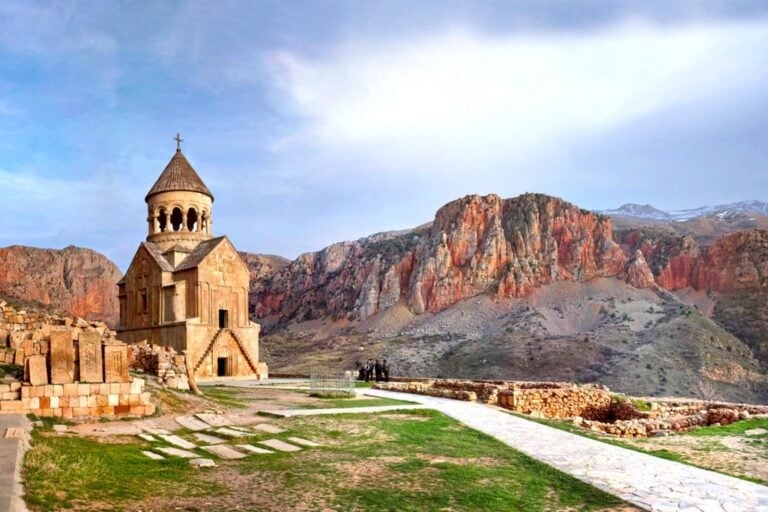
Stand above Noravank Monastery and the first thing you notice is how naturally it belongs to the landscape. The church rises from a narrow gorge of rust-red cliffs, its stone almost echoing the mountains around it. There may be other travelers nearby, but the place rarely feels staged or hurried. You can still stop, look, and let the setting do the work.
That sense of discovery is one of Armenia’s greatest strengths. The country has no shortage of extraordinary history, yet it has not been packaged into a single tourist narrative. Ancient monasteries are still part of the cultural landscape. Wine is made in valleys where archaeologists have traced winemaking back more than six millennia. Yerevan is lively, modern and deeply social, yet an hour outside the capital the scenery can change completely.
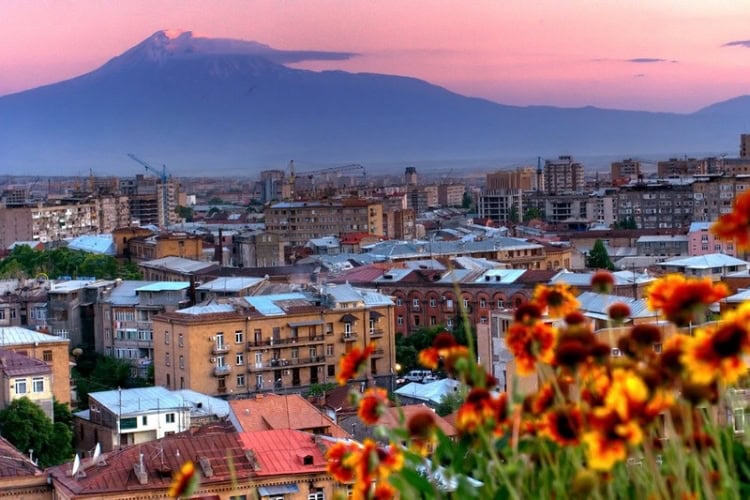
For travelers looking for somewhere culturally rich, visually dramatic and still relatively free of mass tourism, Armenia offers a rare combination: plenty to discover, but enough space to actually experience it.
A Country That Resists Easy Labels
Armenia sits in the South Caucasus, at the meeting point of Europe and Asia. For centuries it has absorbed influences from several directions without losing its own identity. That is part of the appeal. The country does not feel like a smaller version of somewhere more familiar. Its architecture, alphabet, music, food and traditions are unmistakably Armenian.
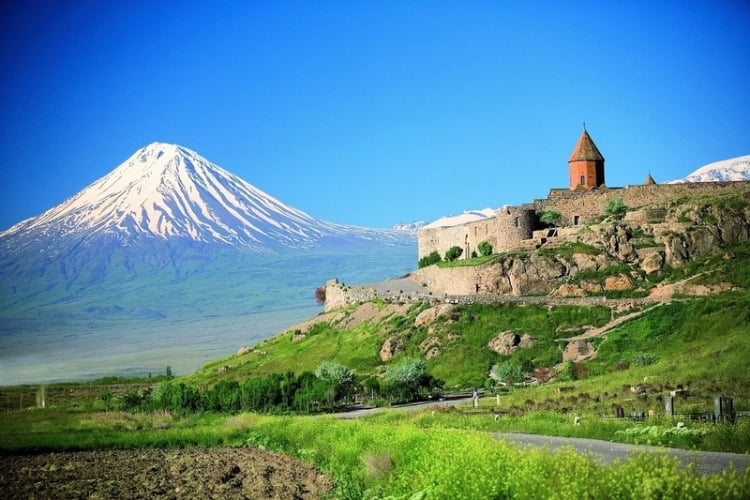
Christianity became part of Armenia’s state identity extraordinarily early, traditionally dated to 301 AD. The legacy is not confined to museums or textbooks. At Geghard, sections of the monastery disappear into the mountain itself. At Khor Virap, the monastery frames one of the country’s defining views: Mount Ararat rising across the border in Turkey, a national symbol woven deeply into Armenian culture.
Then there is the wine. At Areni-1 cave in Vayots Dzor, archaeologists uncovered the world’s oldest known winemaking facility, dating to around 4100 BC. The discovery gives Armenia one of the deepest documented wine histories anywhere, but this is not only an archaeological story. Vineyards still cover parts of the region, and modern Armenian producers are bringing indigenous grapes such as Areni back to international attention.
Go World Travel has previously explored Armenia’s remarkable ancient wine heritage in more detail.
The landscapes shift just as quickly. From the rocky canyons of Vayots Dzor, the road can lead to the high-altitude blue of Lake Sevan, the forests around Dilijan, or the deep Vorotan Gorge in the south. Armenia is compact on the map, but it rarely feels visually repetitive.
Highlights of a Trip to Armenia
Yerevan is a natural starting point, but it deserves time of its own. Volcanic tuff gives much of the center its warm rose-colored character, while the Cascade mixes monumental architecture, public art and open views across the city. Around Republic Square and the surrounding streets, café tables stay busy into the evening. On weekends, Vernissage adds another layer, with crafts, jewelry, carpets, carved wood and Soviet-era finds spread across the open-air market.
Garni and Geghard are close enough to pair in a single excursion. Garni’s classical temple stands above the Azat Gorge, where basalt columns form the natural “Symphony of Stones.” A short drive away, Geghard changes the atmosphere completely: medieval chambers, tombs and chapels cut partly into solid rock, with acoustics that make even a single voice linger in space.
Heading south from Yerevan brings Khor Virap into view against Mount Ararat, followed by the wine country around Areni and the red-cliff setting of Noravank. Continue farther into southern Armenia and the Wings of Tatev crosses 5,752 meters of the Vorotan Gorge to Tatev Monastery. Guinness World Records lists it as the world’s longest non-stop double-track cable car.
Food changes the rhythm of the trip. Lavash, herbs, cheeses, grilled meats, seasonal fruit, dolma, pastries and wine are meant to be shared, and meals have a way of expanding beyond what anyone originally ordered. The generosity feels less like a tourism ritual than an extension of everyday Armenian social life, which is why the table often becomes as memorable as the monuments.
Why Armenia Still Feels Personal
Armenia is no secret, and its best-known sites certainly receive visitors. What makes the country different is that tourism has not overwhelmed the experience. Outside peak moments, it is still possible to spend time at major monuments without feeling pushed through them, to take a longer lunch without watching the clock, or to make an unplanned stop because the landscape suddenly looks too good to drive past.
That slower rhythm matters. Armenia rewards travelers who are curious enough to look beyond a checklist. A memorable day might include a UNESCO-listed monastery, a roadside fruit stand, a wine tasting and a conversation with a guide who turns a name in a history book into a story you remember.
How to Plan Your Trip to Armenia
For a first visit, the challenge is rarely deciding whether Armenia is interesting enough. It’s figuring out how to connect everything: which places fit naturally into the same day, how long the roads actually take, and when a group departure makes more sense than a private car.
That is where Hyur Service becomes useful. The Yerevan-based company has been operating since 2002 and has accumulated more than 17,000 TripAdvisor reviews. It was also named Armenia’s Leading Travel Agency by the World Travel Awards four years in a row, from 2021 through 2024. More importantly for travelers, Hyur Service has spent nearly 25 years turning the practical side of exploring Armenia into clear, bookable options.
Its website works as both a travel resource and an online booking platform. Available in seven languages, it brings together detailed information about Armenia with tours, accommodation, transfers and other travel services. Eligible services can be combined in a single shopping cart and booked online, with instant confirmation where available. For a destination that may still feel unfamiliar before arrival, travelers can research routes, compare options, ask the team for advice and organize much of the trip in one place.
Travelers who prefer a planned day with the logistics already resolved can use Hyur Service’s group tours in Armenia. These operate on scheduled routes from Yerevan with professional guiding and transportation arranged in advance. What is included varies by itinerary and can extend to entrance fees, tastings or hands-on cultural activities. Some departures also offer pickup from centrally located partner hotels.
For a more individual pace, Hyur Service’s private tours in Armenia give travelers greater control over timing and the shape of the day. Private transportation is included, and a guide can be added in the preferred language. This format works especially well for families, couples and small groups, or whenever the priority is freedom to adjust stops and timing rather than follow a preset schedule.
For many visitors, the best approach is a mix of both: scheduled group tours for classic day trips from Yerevan, and a private tour when the route is longer or the day calls for more flexibility.
Armenia is compelling without being framed as anyone else’s “next” destination. Its character comes from the combination itself: mountain roads and medieval stone, ancient wine and contemporary Yerevan, deep history and hospitality that still feels personal. For travelers willing to look a little closer, the reward is a country that feels unmistakably its own.
Inspire your next adventure with our articles below:
- Beyond Western Europe: The Balkans Are Calling
- Tajikistan and Kyrgyzstan Beckon with Ancient Legends, Modern Cities and Indomitable Mountains
Want to discover more hidden gems and helpful travel tips? Join our free newsletter for the latest travel secrets and travel articles.
We are reader-supported and may earn a commission on purchases made through links in this article.

- Armenia Rewards the Curious - August 24, 2026
- Shanghai’s Best Budget Bites: From Shengjian Bao to Hairy Crab Dumplings - August 24, 2026
- Sweeping Views and Underground History at Luxembourg City’s Bock Promontory and Casemates - August 24, 2026