
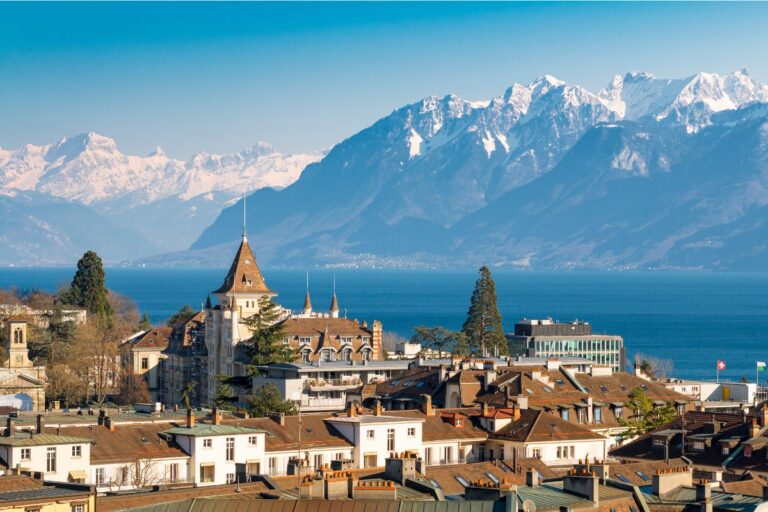
Lausanne, the capital of the canton of Vaud in French-speaking Switzerland, is known worldwide as the Olympic Capital and is one of the country’s most charming cities, set on the shores of Lake Geneva.
If you are on a visit to Geneva, Lausanne serves as a perfect day trip destination. The best way to get to Lausanne is by a 35-45 minute train journey from Geneva. It deposits you in the center of this beautiful city.
But then you might decide to make Lausanne your home base, in which case this beautiful city can serve as a springboard to explore other Swiss towns nearby. Whatever your decision, there is no doubt that Lausanne is a must-visit destination in Switzerland.
Here are my suggestions on what to see and do in the picture-perfect city of Lausanne.
Lake Geneva and the Ouchy Promenade
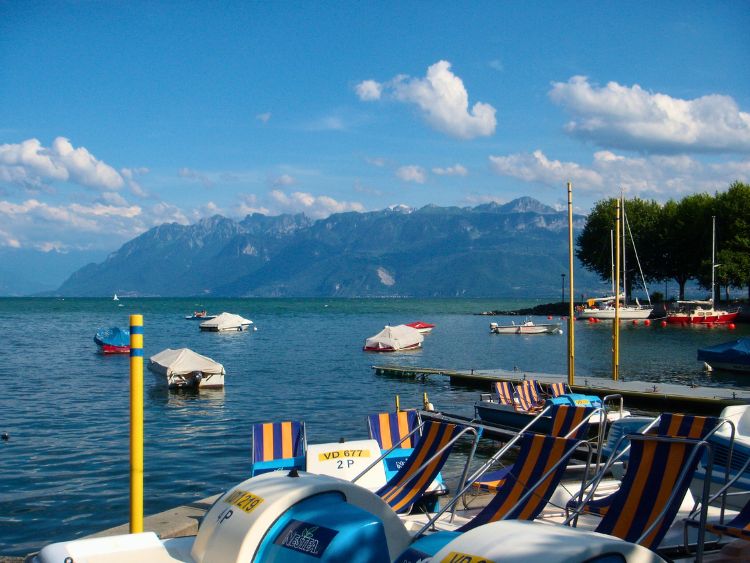
The natural splendor of Lake Geneva makes Lausanne a sparkling gem of a city. We walked on the Ouchy Promenade, a winding, tree-lined esplanade, admiring gorgeous views of the largest freshwater lake in Europe.
There were a myriad of yachts and boats bobbing in it. We marveled at the verdant hills and mountains of France, making a sylvan background.
For those interested, a cruise on Lake Geneva can be a trip highlight. The General Navigation Company (CGN) offers lunch and gourmet cruises as well as destination cruises to nearby towns.
The Streets of Old Town, Lausanne

Walking on the cobblestoned streets of the Old Town, you will feel yourself transported as if into fairy tale land. The colorful buildings with shops and restaurants are perfect for an exploration and stopover as you head to the sightseeing spots of the Old Town.
Here you will find the charming square, Place de la Palud and Escaliers du Marché. A cobblestoned flight of stairs that will take you to the cathedral.
Lausanne Cathedral, Place de la Palud and the Escaliers du Marché
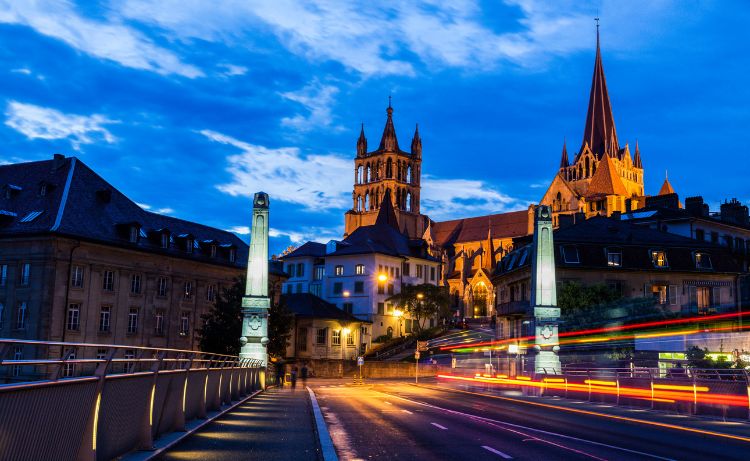
Dating to the late 12th and early 13th century, the majestic Lausanne Cathedral, also known as the Cathedral of Notre Dame of Lausanne, is the largest early Gothic church in Switzerland. The interiors are impressive with the magnificent vaulted ceilings and rows of pillars.
Though the church is medieval, the information noted that the lovely stained glass is modern and was made in the 19th and 20th centuries. You can climb up the 224 steps to the bell tower to enjoy the spectacularly scenic views.
To reach the cathedral, you have to use the Escaliers du Marché. These steeply winding stairs also date back to the 13th century. Go up the covered walkway and marvel at the row of houses that are now restaurants and boutiques. Stop by the Place de la Palud, the pretty central square in the old town.
The Sauvabelin Tower
For nature enthusiasts, the Tour de Sauvabelin, located in the Sauvabelin forest on the outskirts of Lausanne, should be a must-visit destination. Opened to the public in 2003, the 115-foot-high double helix-shaped tower is an architectural marvel, built from local Douglas fir wood.
Climb up its 302 steps to enjoy the panoramic vistas of forests, lakes, and mountains of three countries – Switzerland, France and Germany. Find out more information here.
The Olympic Museum in Lausanne
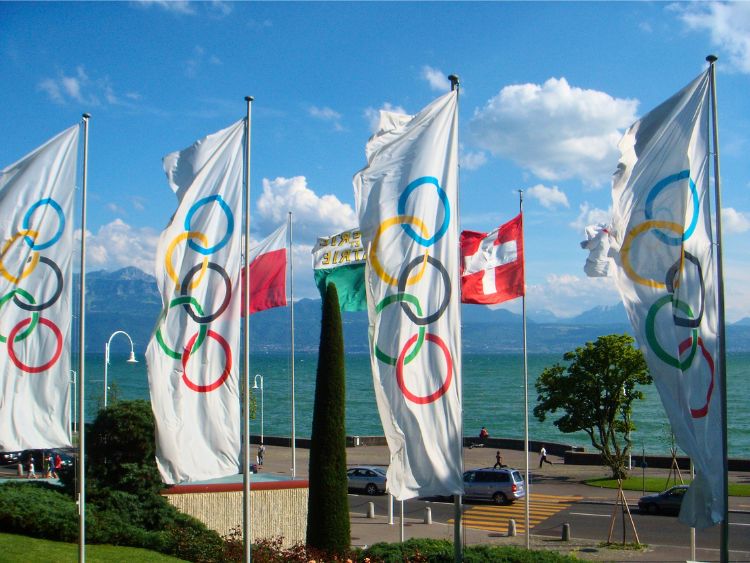
Without a doubt, the Olympic Museum or Le Musée Olympique is the primary attraction here. Lausanne is known as the Olympic capital of the world, being home to the International Olympic Committee. The Committee founded the museum in 1993, with a complete renovation done in 2013.
The museum has captivating exhibits that embody the spirit of the Olympics through many interactive exhibitions, permanent exhibits, films, documents and memorabilia, beginning from antique Greek objects to modern times.
After our museum visit, we spent time in the Olympic Park, the sculpture and floral garden that surrounds the museum.
The sculptures all represent many of the important Olympic sports. And certainly, the hillside location of the museum means that you will enjoy the outstanding panoramic scenery of Lake Geneva and beyond.
Detailed information for tickets and more at the Olympic Museum is here.
The Beau Rivage Palace Hotel in Lausanne
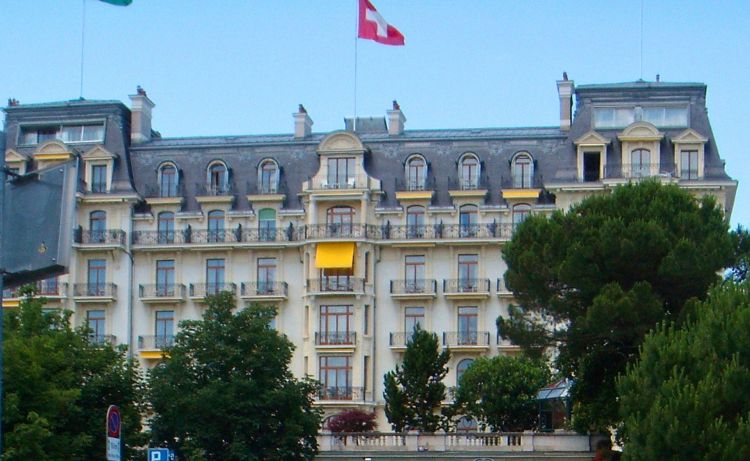
As you walk on the Ouchy Promenade along Lake Geneva, you may notice a palace-like building on the other side. This is the magnificent Beau Rivage Palace Hotel, designed in the Belle Époque architectural style and built in 1861.
The hotel carries historical and cultural significance as the site of an armistice between Italy and Turkey in 1912 and the signing of the Treaty of Lausanne in 1923. Even now, the hotel is well known for hosting diplomatic events.
Set inside ten acres of beautiful gardens, the hotel has a two-Michelin-star restaurant as well as other eateries and cafes offering Italian, Japanese and fusion cuisines.
Book your stay at The Beau Rivage Palace Hotel here.
Enjoyable Excursions from Lausanne
Lausanne is also perfect as a starting point for excursions to many scene-stealing small towns and villages of the Swiss Riviera, which is the north shore of Lake Geneva. Here are the unmissable places to visit:
The Lavaux Vineyards
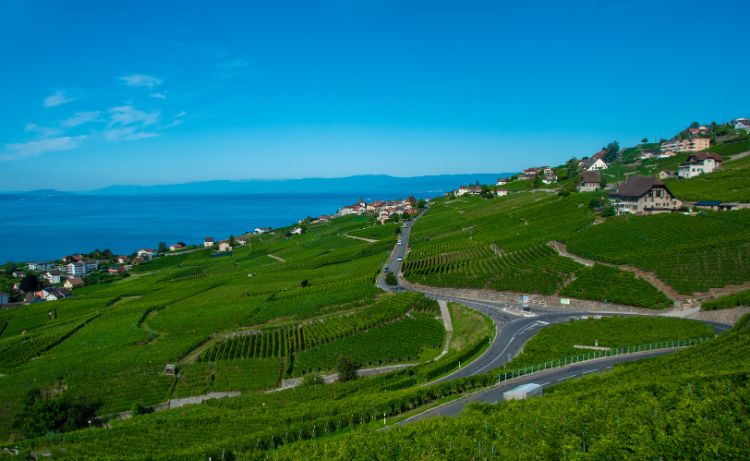
If you have time on your hands or have decided to stay over in Lausanne, you have to visit the enchanting Lavaux Vineyard Terraces, which are a part of the wine region in the canton of Vaud of Switzerland. They are a UNESCO World Heritage Site of Outstanding Universal Value, having been inscribed in 2007.
The terraced vineyards stretch from the eastern end of Lausanne to Montreux, including the wineries at the Chateau de Chillon, a medieval castle on an island on Lake Geneva.
The vineyards are steeped in history, having been producing wine since Roman times. But the present vine terraces date back to the 11th century and wine has been continuously produced here since then.
The landscape is breathtakingly alluring, with the steep slopes covered in grapevines and Lake Geneva shimmering beneath. Stop at one or many lookout spots along your road trip to soak in the scenery. Notice the town of Evian in France across the shores of Lake Geneva.
Find out more about the Lavaux Vineyards here.
Saint-Saphorin
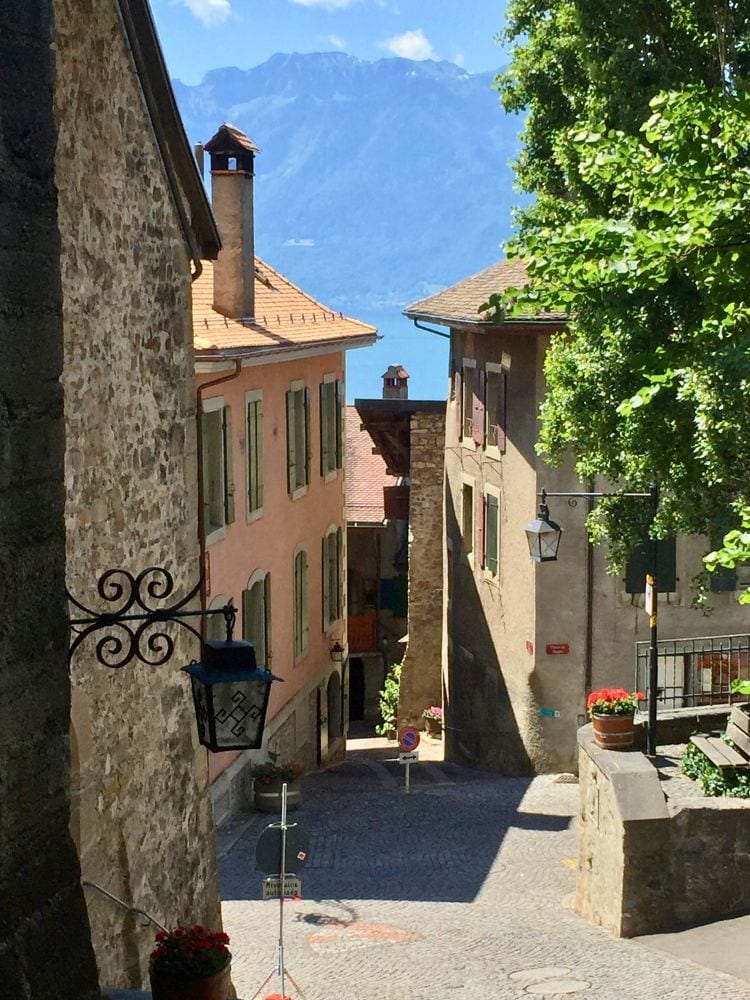
An idyllic village on the hilly slopes overlooking Lake Geneva, with Mediterranean vibes of palm trees, cobbled alleyways and lanes and Mediterranean-style architecture, Saint-Saphorin, nestled amongst the Lavaux vineyards, is a must-stop destination.
Walk the laneways and immerse yourself in the charming sights of the vineyards and the medieval-era church. Stop by the many family-owned cellars to try the local wines.
Chateau de Chillon
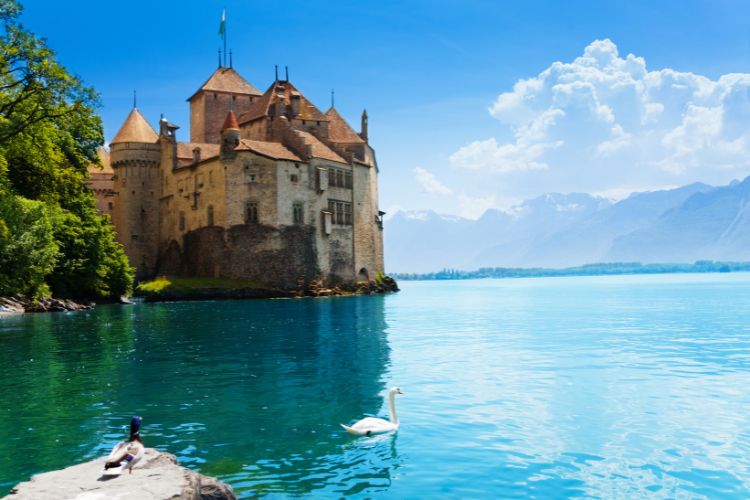
The Chateau de Chillon, a medieval-era castle on the banks of Lake Geneva, is more than 1,000 years old. The English poet, Lord Byron wrote his poem “The Prisoner of Chillon” in 1816, based on the imprisonment in this castle of François Bonivard, a Genevan patriot who was kept here between 1532-1536.
Guided tours are given at the castle, one of the most visited in Switzerland. You can marvel at the turrets, ramparts and the moat on the exterior and the period rooms, prisons and dungeons on the inside.
Arrive at the castle either by walking from Montreux, about 30 minutes while enjoying magnificent views of the lake or by taking a 15-minute ferry ride from Montreux.
The City of Montreux
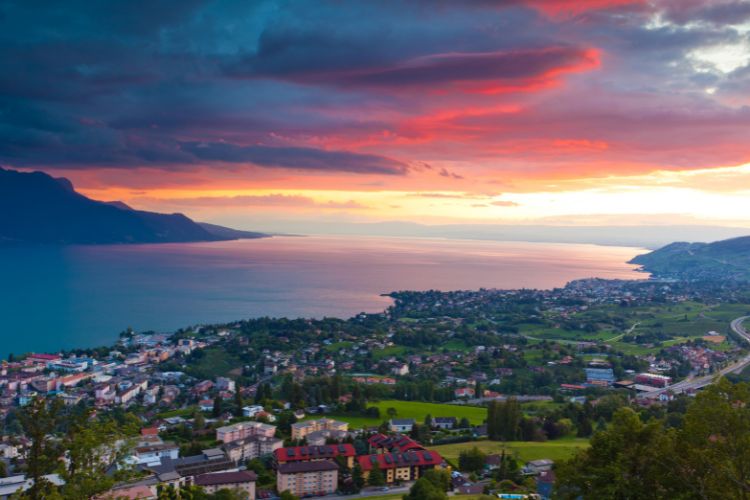
One of the most visited resort destinations on the Swiss Riviera, Montreux is yet another stunning city on the shores of Lake Geneva. The Mediterranean climate and the sublime backdrop have attracted many famous people to this lakeside city, such as Charlie Chaplin, Lord Byron and Mary Shelley.
Interestingly, the rock band Queen recorded seven albums here at Mountain Studios between 1979 and 1996. Their aficionados have made this city their pilgrimage site. Visitors can partake in the excitement at the exhibition Queen: The Studio Experience.
Read More: Montreux: Switzerland’s Lakeside Paradise That Even Freddie Mercury Couldn’t Resist
The Town of Vevey
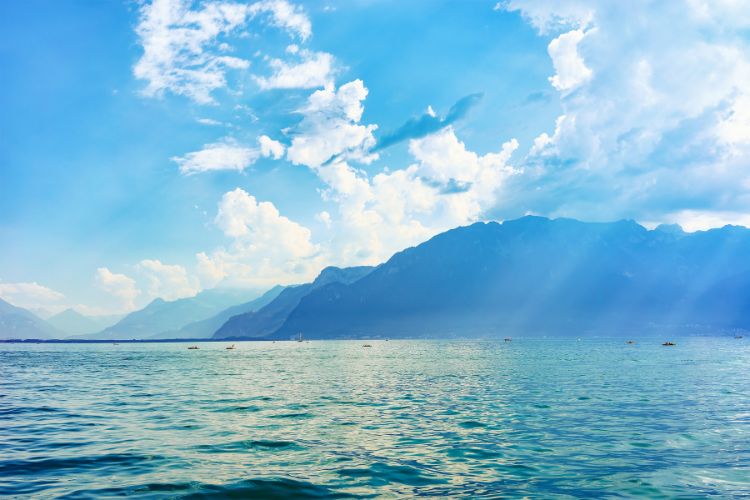
A most charming town also on the Lake Geneva shores, Vevey is at a mere ten miles distance from Lausanne. According to myswitzerland.com, “Vevey is one of the Pearls of the Swiss Riviera.”
Vevey is the headquarters of Nestlé, the food and beverage giant. And it was the home of Charlie Chaplin in the final twenty-five years of his life. Here is information on touring Chaplin’s World, a 37-acre estate that includes his house, Manoir de Ban.
Tourists flock to Vevey to revel in its mild climate and enjoy the extraordinary Alpine views. You can ride the inimitable paddlewheel steamer boats on the lake. You could also journey by the funicular railway that ferries people to the resort and the hiking trails on Mont-Pèlerin, the mountain towering above the town.
Gruyères, Switzerland: The Birthplace of Gruyère Cheese
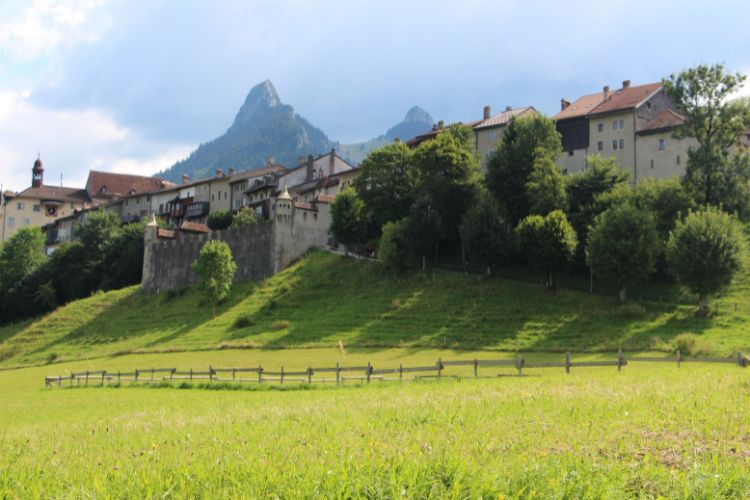
Gruyère cheese, familiar to many of us as the ingredient in Croque Monsieur (the French version of a ham and cheese sandwich) comes from the sylvan medieval town of Gruyères, at about an hour and a half’s train journey from Lausanne.
Visit tiny Gruyères to walk on the even tinier town center with restaurants, shops and hotels on its cobbled streets, all nestled amidst spectacular views of the surrounding Swiss landscape. Stop by the 13th century Château de Gruyères to see its treasures and also take in the extraordinary vista.
Also worth seeing if you have time is the HR Giger Museum, which showcases the work of this Swiss artist. There’s also the Tibet Museum which houses a large collection of Buddhist art from the Indian subcontinent.
And without a doubt, you have to make time to see La Maison du Gruyère to experience the art of cheese making. You will see an interactive exhibition and also watch the cheesemakers go about their craft. Complete your visit by taking in a meal at the restaurant.
The menu changes according to the availability of products but the Gruyère is constant. Find all information here.
Glacier 3000
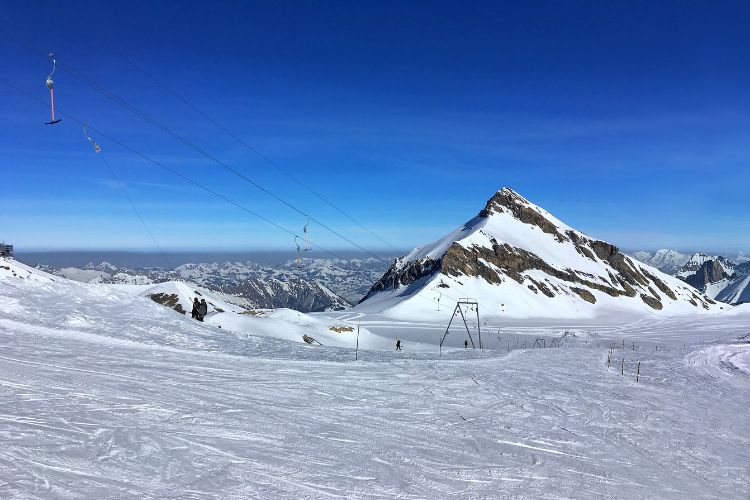
For those visitors who wish to wrap up a Swiss vacation with a trip to a glacier, look no further than Glacier 3000. It is about a two-hour train journey from Lausanne or a one-and-a-half-hour train trip from Montreux. Ultimately, you ride by cable car from the valley station of Col-du-Pillon to reach the top.
Book a day trip to Glacier 3000 from Lausanne on GetYourGuide, including the cable car ride and time at the Peak Walk suspension bridge.
If You Go
Getting There: Lausanne is a 35- to 45-minute train ride from Geneva, making it an easy day trip or an ideal base for exploring the Swiss Riviera.
Getting Around: A Swiss Travel Pass covers trains, boats and many local transit options, including the Lausanne metro. Check Swiss Federal Railways (SBB) at sbb.ch for schedules and passes.
Where to Stay:
The Beau-Rivage Palace is the landmark property along the Ouchy promenade — a Belle Epoque estate set in ten acres of parkland where the Treaty of Lausanne was signed in 1923, with two Michelin-starred dining and sweeping lake views. Book the Beau-Rivage Palace on Booking.com.
What to Do
- The Olympic Museum is open Tuesday through Sunday from 9 a.m. to 6 p.m., closed on Mondays except public holidays. Admission fees apply — check olympics.com/musee for current pricing and tickets.
- The Sauvabelin Tower is free to visit and open daily (summer hours: 9 a.m. to 9 p.m.; winter: 9 a.m. to 5 p.m.). The tower may close in poor weather.
- Château de Chillon, near Montreux, offers guided tours — see chillon.ch for current entry fees.
- La Maison du Gruyère in Gruyères offers an interactive cheesemaking exhibition and restaurant — check lamaisondugruyere.ch for hours and admission.
Need a hand planning your trip? Here are the sites and services we rely on most, from booking tools to travel products we love.
Inspire your next adventure with our articles below:
- Castles, Vineyards and Mountains in Switzerland’s Montreux Riviera
- Valleys, Lakes and Waterfalls in Switzerland That Inspired Tolkien, Queen and More
Author bio: Susmita Sengupta, an architect by background, from New York City, loves to travel with her family. She writes frequently for Go World Travel and other online travel magazines such as GoNomad, Matador Network, Travel thru History, In the Know Traveler and others.
Want to discover more hidden gems and helpful travel tips? Join our free newsletter for the latest travel secrets and travel articles.
We are reader-supported and may earn a commission on purchases made through links in this article.