

Bordeaux is the capital of the Nouvelle-Aquitaine region in the southwest of France. This world heritage city on the banks of the Garonne River is famous for its wine. In fact, it is considered the most important wine-growing region in France.
Bordeaux has over 60 designations of origin, about 115,000 hectares of vineyards and more than 5,000 winemakers. Its prestige, however, reaches beyond French borders. Throughout history, Bordeaux wine has been one of the most famous in the world.
Wine lovers and experts associate the Bordeaux label with quality. Some of the world’s best-valued wines come from this region. As a result, Bordeaux’s winegrowing and winemaking methods have become an international benchmark.
Region of Bordeaux
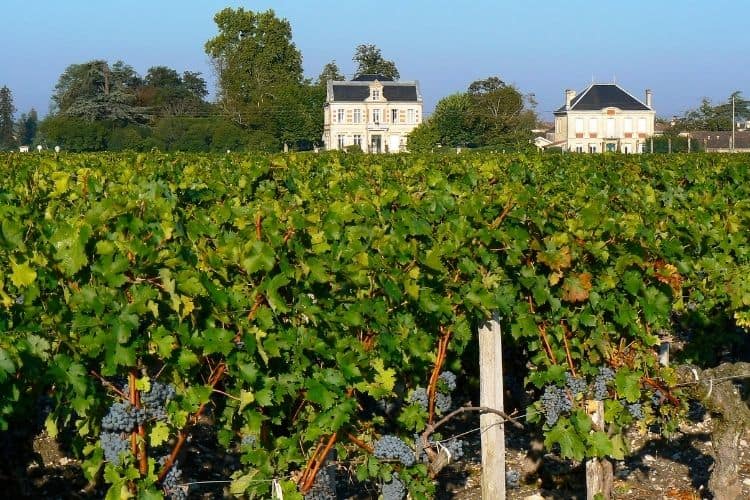
The Bordeaux region is a geographical area with some indisputable climatic advantages. First of all, its proximity to the sea and its riverbeds give it a moderate and stable climate suitable for wine production.
Second, it has numerous microclimates. In addition, its soils are highly diverse, so wines can vary greatly from one part of the Bordeaux region to another.
Vineyards spread along both sides of the Garonne River, providing subtle and harmonious wines. These wines can satisfy even the most demanding palate. Visitors to Bordeaux can get close to the vineyards and visit majestic residences and cellars.
They can also admire the landscape while enjoying a tasting in one of the world’s most prestigious wine regions.
Citè du Vin (City of Wine)
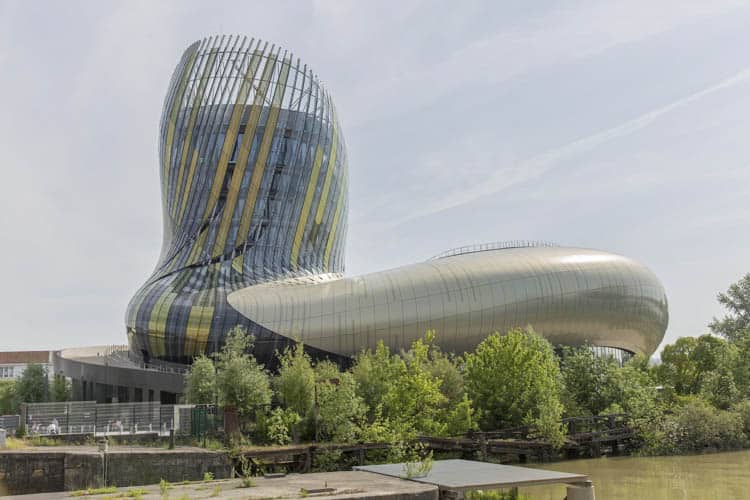
The whole universe of wine is reflected in the Citè du Vin, a venue dedicated to leisure and culture. The curves of its exterior represent the roundness of the wine swirling in its glass. Inside, you can discover all the facets of wine’s soul through a visit that stimulates all five senses.
Since opening in 2016, it has continued to attract tourists to Bordeaux. To date, over 1,500,000 people have visited this architectural jewel. It offers a spectacular journey through the richness and diversity of wine that appeals to a broad audience.
The visit ends with a wine tasting on the top floor of the building overlooking the river Garonne and the city.
Get a preview of the best wines from the Bordeaux region through Wine.com. Chat with a personal sommelier to select wines based on your flavor preferences and budget then get the bottles delivered to your door. Check out their bottle selection and wine experts here.
Fête du Vin (Wine Festival)
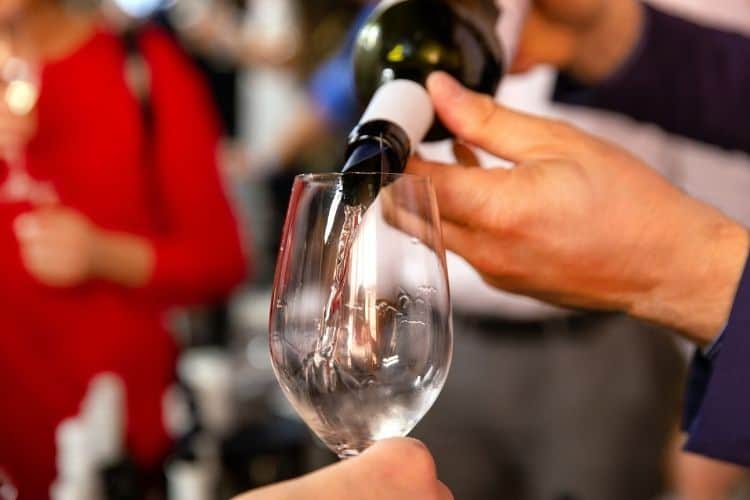
Fête du Vin has become Europe’s major wine tourism event and is held every two years. It is organized by the inter-branch wine association and the Tourist Office. For four days, life in Bordeaux revolves around its star product: wine.
Winegrowers, winemakers and almost half a million wine lovers gather on the quays of the Garonne. This iconic open-air wine bar route lets the public stop at local food tasting stands, visit legendary boats and attend events such as fireworks or musical evenings.
Visitors can even take part in gastronomic workshops led by real chefs.
École du Vin de Bordeaux (School of Wine)
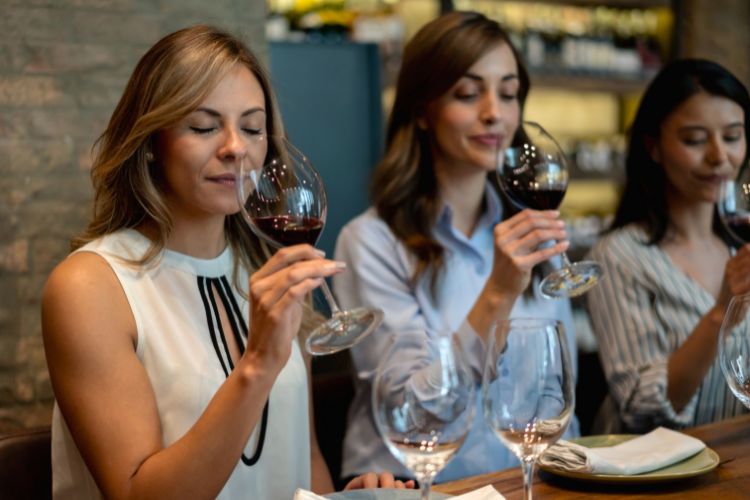
Being in the city of wine par excellence and not being able to appreciate its nuances and flavors would be a shame. Luckily, the solution is simple. The School of Wine is the perfect place to take an introductory journey into the world of wine.
From the fundamentals to intensive enology workshops, no matter what your knowledge, there are courses for all levels, from beginners to professionals. Courses led by wine experts teach how to observe the wine and its color, appreciate its aromas, guess its composition and even go into the art of food and wine pairing.
Saint-Émilion
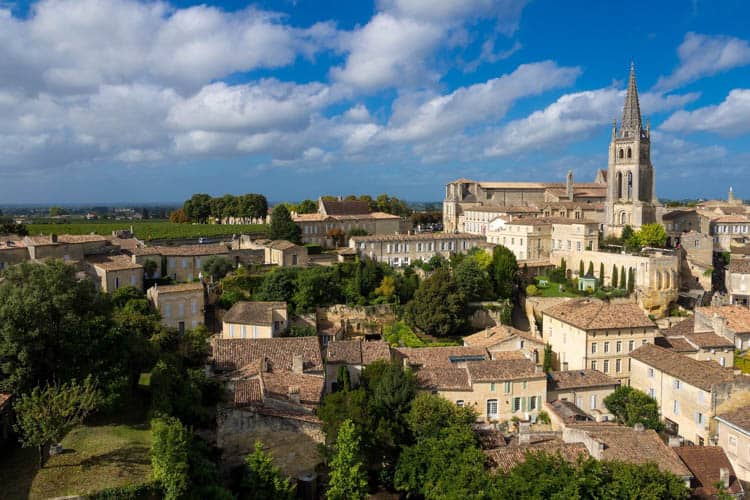
Thirty minutes away from Bordeaux, this beautiful medieval town between vineyards and streams is a must for wine lovers. It has a long and rich history, from a pilgrimage center to a monastic town.
A wall surrounds this town full of steep streets and small honey-colored houses. During the Middle Ages, the town was separated into an upper and a lower part. The bourgeoisie lived in the upper part and the peasants in the lower one.
You can still visit the gate today that separated the two social classes of the city. Back then, it would have been closed with a chain.
In addition to its historic center, Saint-Emilion also has castles and cellars where the renowned Saint-Emilion wine is produced. Moreover, no less than 5,000 hectares of vineyards make up the landscape of the eight communes of Saint-Emilion.
These vineyards belong to 860 different wineries, four of which have the Premier Grand Cru Classé A label, the highest quality label.
There are numerous cellars attached to the Saint-Émilion designation of origin open to the public to visit the property and taste their wine. The best way to explore this area is to rent a bicycle from the town’s tourist office and follow one of the routes to discover the area’s châteaux.
Route of the Médoc Châteaux
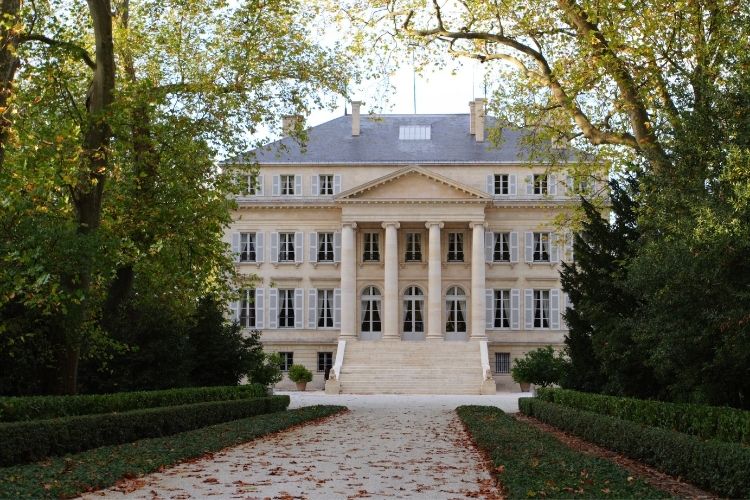
Another route around Bordeaux is that of the châteaux of the Médoc. Above all, it is perfect for cycling and making stops at famous châteaux such as Margaux.
There are about 9,000 cellars concentrated in the Bordeaux region, 7,000 of which are châteaux. To clarify, the designation of a château is when cellars are surrounded by their own vineyards, from which they obtain the grapes to make wine.
Extending from Bordeaux to Pointe de Grave, this route contains most of the region’s great appellation wines. As a result, it is one of the world’s most prestigious wine-growing regions.
Bordeaux is the perfect place to discover wine culture: from visiting the Cité du Vin to having a drink by the Garonne or taking a guided tour. There are endless ways to enjoy the city through its main product.
If You Go
Getting There
Bordeaux-Mérignac Airport is linked to the city center by Tram A, which reaches Place Pey-Berland in about 35 minutes. High-speed TGV trains also run from Paris to Bordeaux Saint-Jean station in roughly two hours.
Getting Around
- Central Bordeaux is compact and walkable, and the tram covers most of the rest. Get your bearings on your first morning with this two-hour guided walking tour led by the Bordeaux tourist office. It covers Place des Quinconces, the Water Mirror at Place de la Bourse and the lanes of the old town.
- Saint-Émilion is an easy day trip without a car. Regional TER trains run from Bordeaux Saint-Jean to Saint-Émilion station in about 35 minutes. From there, the village is a 20-minute walk.
- In Saint-Émilion, local outfitters like Véloce rent bikes and e-bikes. A rental includes free access to dozens of cycling loops mapped by the tourist office through the vineyards.
- If you’d rather drive the Médoc wine route at your own pace, reserve a rental car through Discover Cars and choose a designated driver before the first tasting.
Where to Stay
- InterContinental Bordeaux Le Grand Hotel faces the Grand Théâtre on Place de la Comédie. It has a full spa, an indoor pool and a rooftop bar overlooking the old city.
- Mondrian Bordeaux Les Carmes puts you in the Chartrons district, a short tram ride from the Cité du Vin, with a full-service spa on site.
- Hôtel de Pavie sits on the cliff above Saint-Émilion beside the bell tower. Its restaurant, La Table de Plaisance, holds two Michelin stars.
- Château Hotel & Spa Grand Barrail is a vineyard stay just outside Saint-Émilion with a full spa.
- If you’re traveling with a group or staying a week, browse vacation rentals in Bordeaux on Expedia.
Wine Tours and Tastings
- Skip the line at the Cité du Vin with this entry ticket and wine tasting. It includes a digital guide in eight languages and a glass on the eighth-floor Belvedere with views over the city. Opening hours and exhibitions are on the Cité du Vin website.
- This St. Emilion half-day wine tour caps groups at eight. It pairs a guided walk through the medieval village with a tasting at a classified growth château, and it has more than 700 reviews averaging 4.7 stars.
- On the Left Bank, this Médoc half-day wine tour visits two estates in the Margaux or Haut-Médoc appellations and passes Château Margaux along the way.
- For the vineyards by bike without planning the route yourself, this St-Emilion e-bike tour with wine and lunch handles the logistics.
- Back in the city, this Garonne River cruise with a glass of wine and a canelé takes about 90 minutes.
Wine Classes
- The École du Vin de Bordeaux was founded in 1989 by the Bordeaux wine council. Its workshops are taught by working winemakers and oenologists and run from two hours to a full day, with English sessions in summer.
- For something shorter, this guided tasting class with six wines and food pairings covers Left and Right Bank styles in 75 minutes.
When to Go
Bordeaux Fête le Vin is skipping 2026. It returns July 7 to 11, 2027, alongside the start of the Tall Ships Races. Late summer and early fall bring harvest season to the vineyards.
Need a hand planning your trip? Here are the sites and services we rely on most, from booking tools to travel products we love.
Inspire your next adventure with our articles below:
- The Best Wine Regions in Europe for Your Next Tasting Adventure
- Sip Your Way Through France: The Ultimate Wine Lover’s Journey from Champagne to Corsica
Author Bio: Based in France, Lucia Otero Medraño is Spanish with a master’s degree in travel journalism. She has worked in the tourism sector but her true passion is to live enriching experiences and discover amazing places around the world and write about them. In her spare time, she likes to enjoy her second passion, music.
Want to discover more hidden gems and helpful travel tips? Join our free newsletter for the latest travel secrets and travel articles.
We are reader-supported and may earn a commission on purchases made through links in this article.

Planning another trip soon? ✈️
Add GoWorldTravel.com as a preferred source on Google. Click the button below so our local guides, packing hacks, and hidden-gem itineraries always show up first when you search!
Add to Preferred Sources