
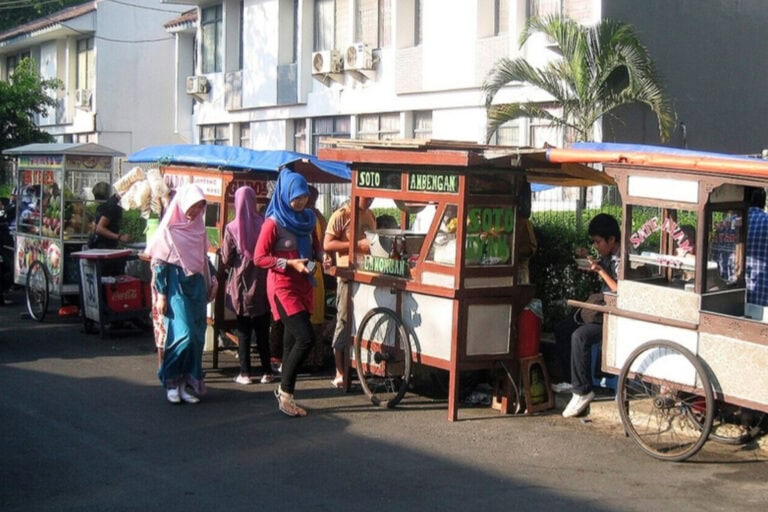

Hidden in the heart of Malang, a mid-sized city in East Java, Indonesia, Celaket is not your usual travel destination. It isn’t featured in guidebooks or glowing with tourism signs.
Instead, it lives quietly between the past and the present, nestled along Jaksa Agung Suprapto Street. I often pass through it as part of my daily route as a motorbike salesman, but one day, I decided to stop. What I found there surprised me.
Strange things happen on the edge of a quiet town when nobody’s watching. Like pigeons made of stone playing a game no one remembers.
The Unassuming Entrance

The first time you see Celaket, it doesn’t ask to be noticed. It’s a stretch of street in Malang that people drive through, not to. Old buildings slump next to minimarkets. Electrical wires hang like confused noodles. It feels like a place mid-sentence, always halfway between memory and motion.
But somewhere past the busier intersections and the buzz of daily trade, there’s a turn. No sign, no gate. Just a cracked pathway leading into an alley lined with walls full of peeling paint and scribbles of unknown origin. Step in, and you’ll find the city whispering in a language not spoken in guidebooks.
At the end of this alley is a bench made of concrete slabs. Ordinary. Except it isn’t. The seat is etched with squares like a chessboard. On it are pigeons — sculpted, rough, painted in fading colors. They sit frozen, mid-game, as if waiting for someone to make the next move.
A Mysterious Origin
Nobody knows who made them. Some say they were part of a failed public art project. Others believe they were made by a retired stone mason who used to feed the birds here every morning.
But if you ask the kids playing nearby, they’ll tell you it’s the board where the neighborhood makes its decisions.
Celaket is a place where the past hasn’t been swept away, just rearranged.
A Walk Through Time

What makes Celaket, Indonesia, special is not a famous landmark or grand attraction, but its layers. Layers of memory, routine, and art that feel alive even when no one is watching. It’s the kind of place where time feels a little slower, and stories sit quietly in corners, waiting to be noticed.
Along Jaksa Agung Suprapto Street, signs of history stand shoulder to shoulder with the now. Colonial buildings used to house legal offices; now, they hold print shops, tailors, or nothing at all.
There’s a faded sign in Dutch above a door where a woman sells fried tofu and sambal from a single gas stove. She doesn’t speak Dutch, but she says her grandfather did, and she still uses his pans.
The Sounds of Celaket
Keep walking and you’ll catch the scent of paper, ink and engine oil. Tucked behind a faded blue fence is one of the last independent offset printers in the area.
Inside, the machines wheeze like old men telling stories. Posters, pamphlets, school books, and even wedding invites are still made here the way they were thirty years ago.
The owner doesn’t advertise. People just know to come. His only assistant is a teenage boy who spends half his time folding paper and the other half scribbling poems on scraps and slipping them into printed books like secrets for strangers to find.
A Neighborhood’s Pride

For visitors, Celaket offers a different kind of travel experience. You won’t find big crowds or fancy cafes here. Instead, you’ll find handmade things, spontaneous performances, and a sense of neighborhood pride that speaks through everyday actions.
This is a place that welcomes curiosity, not selfies. The streets here have their own rhythm.
Around four in the afternoon, kids come out with water bottles that used to hold cooking oil. They spin the caps into makeshift tops and battle them on the cracked pavement. The sound of plastic scraping concrete is as regular as the call to prayer.
At the corner near the old train wall, locals gather. Not to drink coffee but to argue in rhymes. Someone sets down a portable speaker. Another brings a megaphone.
What follows is something between stand-up comedy and a duel — poetry battles that have no stage and no script. The rules are simple. Make them laugh. Make them think. Don’t be boring.
Changes on the Horizon

One man once performed three verses using only the names of local noodle stalls. The crowd roared. A teenager responded with a monologue about his bicycle’s lost tire and somehow, it ended in applause.
There are no tickets. No schedule. It just happens. The city breathes like that — spontaneously, without warning.
But something’s been changing.
Shutters close earlier. The printing shop no longer runs on weekends. Some of the old murals have been painted over with advertisements. The woman who sold tofu stopped opening her window stall last month.
A small construction site now stands where the community park used to be. It’s not big, just a lot of gravel and poles surrounded by green tarp. Rumor says it’s going to be a franchise coffee shop. The kind with QR codes and cold AC.
The stone pigeons have graffiti on them now. Not the artistic kind. Just marker scribbles. Names, initials, someone’s bad drawing of a face.
Preserving What Matters

Locals have started walking past the alley without turning in. But the place hasn’t given up.
At dusk, you can still hear the sound of someone plucking a guitar string outside the worn-out musalla. You’ll still see the neighborhood sweeping the street on Sunday mornings, clearing leaves and forgotten trash into small piles.
Someone taped a note to the stone bench last week. It wasn’t poetic. Just four words written in messy handwriting: “Don’t fix what matters.”
Nobody took it down.
Inside the print shop, the teenage boy still slips poems between pages. But now they’re shorter, sharper. One of them said, “If a city forgets its corners, who reminds it?”
The machines haven’t stopped. But the owner has started teaching the boy how to fix them, just in case.
Leaving a Part of Yourself

There’s something about places like Celaket. They don’t advertise themselves. They don’t ask for attention. But they remember you if you stay long enough.
There’s a spot near the alley wall where moss has grown in the shape of a map. Some say it looks like Java. Others say it looks like a bird flying away.
And if you sit on the stone bench, look close. The pigeons aren’t facing the same direction. One of them has been turned. Not by time or accident. Someone moved it, just slightly.
It’s facing the street now. Watching.
Things disappear. Corners change. History erodes. But not everything.
You walk back out of the alley and the sound of the city returns. Horns, vendors, scooters, life moving faster again. You keep walking until the alley is behind you, but something follows.
Not noise. Not memory. Just the strange sensation that you’ve left a part of yourself behind, quietly sitting next to a stone pigeon, waiting for someone to make the next move.
If You Go
- Celaket is located in the heart of Malang, East Java. It’s walkable from the main station and is known by locals more than by signs.
- Try exploring on foot late afternoon when activity picks up naturally.
- There’s no exact address for the pigeon bench, but locals near Jaksa Agung Suprapto Street can usually point you there if you ask about “papan merpati.”
- Bring small change. The tofu seller, if she’s there, only accepts cash.
- Don’t just take photos. Listen. Observe. Sometimes, what matters most can’t be posted.
Celaket is not a polished tourist spot, but it rewards those who walk slowly and look twice. Travelers seeking something real, something between the usual destinations, might find a small wonder here, not in grand views, but in the way people live, speak, and remember together.
Travel insurance is essential for any trip, offering peace of mind and protection. Explore options with SafetyWing or SquareMouth to find the coverage you need.
Inspire your next adventure with our articles below:
Author Bio: Fendy S. Tulodo is an art worker from Malang, Indonesia. He works with words and music to study how time feels different to people, and how connections linger even when they’re gone. By day, he sells motorcycles. By night, he makes moody music as Nep Kid and writes stories in different forms. His art lives in the gap between words and true feelings.
Want to discover more hidden gems and helpful travel tips? Join our free newsletter for the latest travel secrets and travel articles.
We are reader-supported and may earn a commission on purchases made through links in this article.

- Fall Day Trips from Vancouver: 7 Scenic Walks Worth the Drive - September 15, 2026
- Laos for Backpackers: Vientiane, Vang Vieng and Luang Prabang on a Slow-Travel Route - September 15, 2026
- Why “Just Immerse Yourself” Won’t Teach You Spanish, No Matter How Long You Stay - September 15, 2026
Planning another trip soon? ✈️
Add GoWorldTravel.com as a preferred source on Google. Click the button below so our local guides, packing hacks, and hidden-gem itineraries always show up first when you search!
Add to Preferred Sources