


Twenty-six miles across the sea,
Santa Catalina is a-waiting for me…
In 1957, the Four Preps crooned about an “island of romance” off the coast of Southern California. Back then, this song inflamed the imagination of this anxious, tortured, barely pubescent 15-year-old with visions of swaying palm trees, balmy breezes, and especially California blondes.
Now, seventy years later, an older, wizened version of this teenager was heading to that island of romance with his own California blonde (now white-haired) for a two-night excursion unlike most anything else on the U.S. mainland.
Santa Catalina, as it is formally known, was originally inhabited by various Native American tribes, then claimed by Spain and later by Mexico. It became part of the United States, along with the rest of California, in 1848. In 1919, William Wrigley Jr., of chewing gum and Chicago Cubs fame, bought most of the island and invested millions to develop the resort town of Avalon, the only incorporated city on the island. His descendants created the Catalina Island Conservancy in 1975 to preserve most of the rest of the island as a nature conservancy.
This magical island, with its distinctly Mediterranean vibe, is the perfect side trip on a visit to Southern California, a refreshing counterpoint to Disneyland, Venice Beach, and Hollywood. Although it’s part of Los Angeles County, it feels like a trip to another country.
With one million visitors a year, Catalina is crowded during the summer. The recent best-selling book, Nightshade, by famed mystery writer Michael Connelly, is set in Avalon and may make it even worse during high season. Fortunately for me and my wife, it was almost deserted during our visit in January.
Getting There is (Almost) Half the Fun

The fun begins with the Catalina Express, a scheduled passenger service offering frequent trips from Long Beach, just south of Los Angeles, the starting point for our trip. The Express also runs ferries from San Pedro, a neighborhood in the South Bay area of L.A., and Dana Point, further south in Orange County.
Our trip, on a comfortable high-speed catamaran, took about an hour — a scenic hour that began with views of downtown Long Beach, then the Queen Mary and the massive cranes of the Port of Long Beach before the boat headed out into the open water between the mainland and the island.
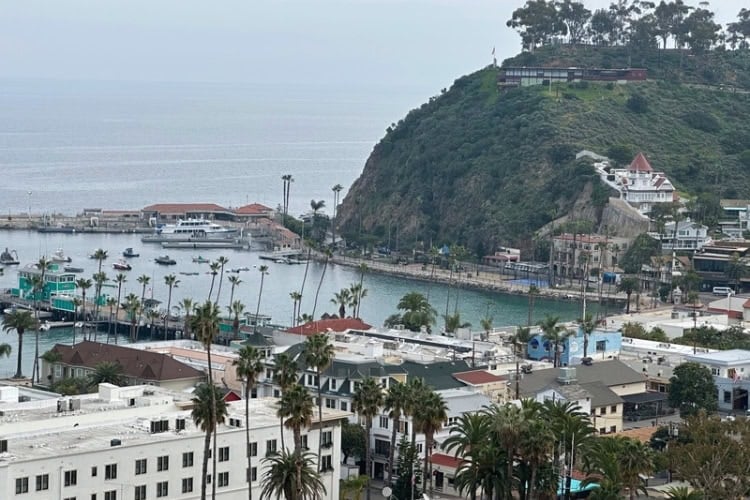
As we approached Avalon, we saw the iconic Casino at the far end of the harbor. It is the largest building on the island, about 12 stories high and architecturally distinct in Art Deco and Mediterranean styles. Despite its name, it was never used for gambling but primarily as a venue for movies and dances. It is still used as a theater, as well as for community events and festivals.
At the other end of the harbor is the pier and terminal for the Catalina Express. Curving between the pier and the Casino, the harbor is dotted with all kinds of boats at anchor, a narrow beach, and a promenade lined with shops, restaurants, and low-rise boutique hotels. Off the promenade, neighborhoods of quaint wooden houses, apartments, and other buildings extend for a few blocks, then rise above downtown Avalon on the steep, brush- and tree-covered hills that loom over the town.
Read More: Become a Certified Mermaid on Catalina Island, California
Exploring Avalon
For our two-night visit, we stayed at the historic Atwater Hotel, less than a block from the promenade. The hotel was built by the Wrigley family in 1920 and named after William Wrigley’s daughter-in-law, Helen Atwater. The charming lobby is decorated with artifacts from Helen’s life, including various board games, the original Wrigley safe from Chicago, and several musical instruments, including a full-size harp. It was the first time I had ever been directed to my room by looking for the “elevators behind the accordion.”
We dropped our luggage off in our room and took a leisurely stroll on the promenade, stopping often to gaze at the view, the boats in the harbor, and a blue heron perched on a rock in the water. We also checked out the Casino up close, as well as the historic buildings associated with the Catalina Island Yacht Club, founded in 1925, and the Tuna Club, not a sandwich but one of the oldest fishing clubs in the world, founded in 1898.
The next morning, we hiked the steep Country Club Loop that heads uphill from downtown Avalon along Country Club Road, then descends along winding streets past quaint wooden houses clinging precariously to the steep hills back into town. The 1.5-mile walk was challenging at first as we climbed above the town, but the elevated views of Avalon and the harbor were well worth it.
Exploring Catalina’s Interior
In the afternoon, we went on a 3-hour eco-tour through the interior of the island in an open 4WD vehicle offered by the Catalina Island Conservancy. Avalon’s electric-powered golf carts and diminutive Japanese-made “micro cars” (there is a 25-year waiting list for full-size cars) are not allowed on the roads outside of Avalon, so the only way into the interior is via tours offered by private companies or the Conservancy. Hiking and backpacking, with permits, is also allowed.
Our guide, Christian, was excellent, pointing out native and invasive plants, describing wildlife conservation efforts over the years, and recounting the history of the island. He was particularly passionate in describing the Wrigley family and the Conservancy’s ongoing role in promoting conservation on the island.
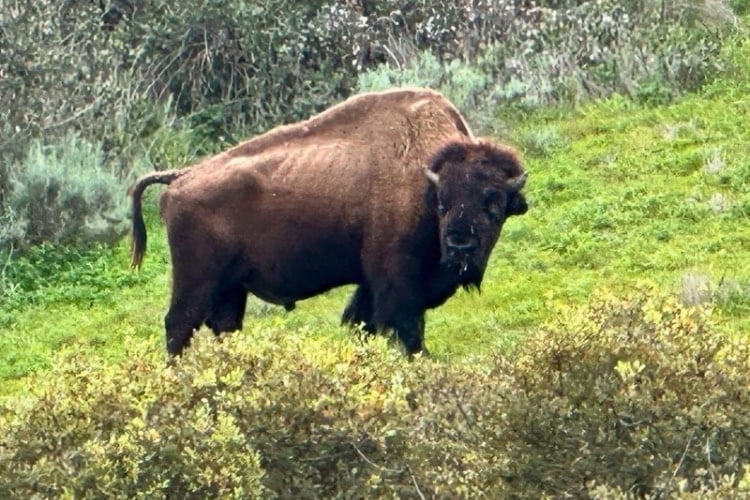
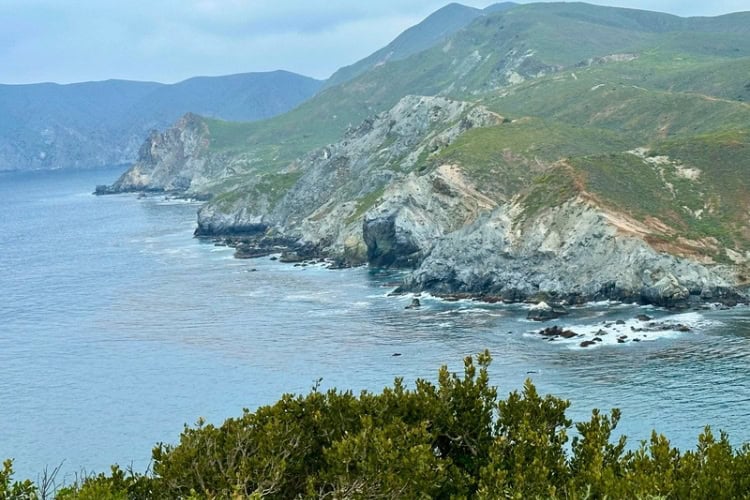
The highlights of the trip were the views of the rugged, wild coastline on the western side of the island and the legendary herd of about 150 buffalo, descendants of a small herd left on the island after a movie shoot in the 1920s.
Back on the Mainland
Our brief visit ended the following day with our Catalina Express ride back to Long Beach. Long Beach is, perhaps, best known as the birthplace of Snoop Dogg. But Long Beach offers many other attractions for the intrepid traveler — the Queen Mary, a historic, retired ocean liner and museum; the Aquarium of the Pacific, a world-class aquarium featuring touch tanks and a shark lagoon; and the Museum of Latin American Art. It also has the largest population of Cambodians in North America and, therefore, many excellent Cambodian restaurants.
Loathe to dissipate the glow of our Catalina sojourn, we skipped the many attractions of this often-overlooked Southern California gem to beat the traffic and head back to Los Angeles.
This short, sweet excursion on Catalina Island brought me back to that time many years ago, when, as a young teenager anxiously facing an unknown future, I first heard those lyrics and dreamed of a life that seemed hopelessly out of reach. Who knew back then that I would be visiting the “island of romance” seventy years later with my own California blonde?
The trip was well worth it, from Long Beach to Catalina, from then to now.
Read More: 7 Incredible U.S. Islands You’ll Want on Your Bucket List
If You Go
Other hotels on the island, aside from the Atwater, include the Zane Grey Pueblo Hotel, the former home of the renowned novelist, and Mt. Ada, the former home of William Wrigley Jr. and his wife, Ada.
As you might expect, fresh seafood reigns supreme on the island. We ate at the Bluewater Grill on the water one evening and the more casual Lobster Trap on the other. Both were excellent.
For more information on Catalina Island, check out the official site. Book your crossing through Catalina Express, or explore the island’s trails and wildlife with Catalina Conservancy. Maps and additional information are also available at the Catalina Island Visitor Center on the Green Pleasure Pier, just a short walk from the Catalina Express boat terminal.
Note — Don and Katherine’s trip was hosted by Love Catalina
Inspire your next adventure with our articles below:
- Where to Hike, Paddle, and Eat in South Lake Tahoe This Summer
- Four Resorts, One Stunning Setting: Villa Group’s Cabo San Lucas
Author Bio: Don is an award-winning travel writer. After a 40+ year career as an organizational psychologist, consultant, and academic, he transitioned to travel writing with the publication of his National Geographic book, Riding the Hulahula to the Arctic Ocean: Fifty Extraordinary Adventures for the Seasoned Traveler (with Shannon Stowell, 2008). The Wall Street Journal called this book, “ One of the best travel books to cross our desk this year…A wonderful – and inspiring – read.” Don specializes in writing about transformational travel and adventure travel for 60+ travelers.
Want to discover more hidden gems and helpful travel tips? Join our free newsletter for the latest travel secrets and travel articles.
We are reader-supported and may earn a commission on purchases made through links in this article.

- 7 Crowd-Free British Autumn Getaways Beyond the Cotswolds - September 18, 2026
- From Gouda to The Hague: Why These 4 Dutch Cities Are Perfect Amsterdam Alternatives - September 18, 2026
- Inside Slovenia’s Charcoal Country: Kilns, Forest Villages and a Living Craft - September 17, 2026
Planning another trip soon? ✈️
Add GoWorldTravel.com as a preferred source on Google. Click the button below so our local guides, packing hacks, and hidden-gem itineraries always show up first when you search!
Add to Preferred Sources