
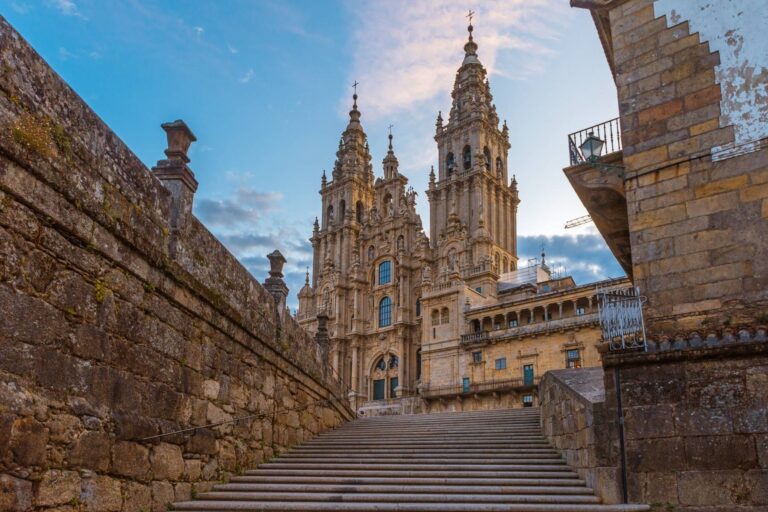
My husband and our friends joined an elite group this year when we walked 115 km on the St. James Way to the Santiago de Compostela Cathedral in Spain. Just over 12 percent of pilgrims in 2024 were 65 years old or older.
At 73, my husband was the oldest member of our group, while our friends were 69 and 70, respectively.
The Camino Begins in Your Heart
They say the Camino begins in your heart. For us, the desire to walk the French Way began when we heard another pilgrim’s experience. Our reasons were as varied as we are as individuals. I wanted to connect with the souls who have made these journeys for more than 1,000 years.
After Jerusalem and the Vatican, the Way of St. James is the most popular and ancient pilgrimage. The first pilgrim was King Alfonso II of Asturias in the year 813.
He heard that St. James’ remains were found and set out to visit the apostle’s burial site. The Camino de Santiago de Compostela, or St. James in a Field of Stars, was born.
The King also encouraged his subjects to make the trek and settle along the route. These new towns and villages helped defend Spain from Moorish incursions. Walking the Camino may be a metaphor for life’s highs and lows, but it is also a time machine back to the Middle Ages.
Ten Practical Tips for Success After 65

I. The Way Begins in Your Heart
We made the Camino our own by preparing. We studied the many different pathways for pilgrims on their way to Santiago de Compostela and chose the popular French Way. We committed to the challenge one year before we flew to Madrid and drove to Sarria.
During this time, we made travel plans and reservations, did research, and bought gear.
Our physical training was ongoing. We walked and worked out at the gym three to five days a week. We hiked eight kilometers with our packs, first empty and then packed. I lost ten pounds to accommodate the extra weight I would be carrying on my back.
II. Get Comfortable with Your Gear
The internet is loaded with articles about the best gear to buy. Most importantly, break in your tennis shoes and hiking boots well before leaving for Spain. I bought light, waterproof tennis shoes with ankle support.
They served me the whole way. Also, smart wool, double-lined socks will keep your feet dry and blisters at bay.
We put together one medical kit for each couple: band-aids and blister cushions, medication, and ointment. We made it all the way to Santiago without blisters.
III. Your Backpack is Your Home
I had my backpack professionally fitted before I bought it, which I strongly recommend. A badly fitting pack or one that is too big for your body can tire you out faster and make the journey more uncomfortable than it needs to be.
Even if you take advantage of the services to send your bag ahead, which you should, you will develop an intimate relationship with your pack.
I used plastic bags to organize the contents. My friend bought travel pouches for her pack. We placed shirts in one bag and pants in another. We packed lightly: three pairs of pants, four shirts, sunblock, and other personal hygiene items.
Once filled, my backpack weighed seven pounds. We did not fit our packs with drinking water systems and relied on water bottles instead. For longer hikes, water dispensers are the way to go.
We carried our packs the first two days of our pilgrimage. After that, we used a day pack on the trail and sent our larger luggage ahead using a baggage transfer service.
Every morning, we placed 4 Euro coins in envelopes, attached them to our packs, and left them downstairs by 8:30 a.m. Like magic, our packs were in the lobby of our hotel or apartment by the time we arrived. The service was safe.
Bring Euro coins to pay for the service. And remember, if you leave anything hanging off the outside of your pack, you are likely to lose it.
IV. Go at Your Own Pace
So far in 2025, almost 79,000, or more than 30% of pilgrims, began their trek in Sarria. Typically, the last 115 km takes six days to hike. We decided to take it easier and dedicated 11 days to our journey. We started in late April and finished in early May 2025.
We walked a leisurely 9 kilometers from Sarria to Peruscalla and stayed in a charming stone house in a tiny village on the first day. The second morning, we walked 19 km from Peruscalla to Portomarin, with our packs loaded onto our backs.
Our hardest day was hiking from Portomarin to Gonzar. It was all uphill, and we still had not gotten into the groove of sending our bags ahead. That was our hardest day.
Over the next 10 days, we established a rhythm of walking between 8 and 15 kilometers a day. In the middle of the journey, we took a day off in Melide to rest and do laundry.
Because the French Way from Sarria is so popular, it gets crowded. Rush hour started around 8 a.m. Walkers left before sunrise to avoid the crowds. We staggered our hours and left later in the morning.
Because we were taking it slow, we would do stretching exercises in the morning, have breakfast, and leave around 9 a.m. We ate lunch on the trail and arrived at our destination by mid-afternoon. After a rest, we had the afternoon and evenings to explore our surroundings.
V. Reserve Comfortable Accommodations
They say the Camino provides, but like in life, we must also give our fifty percent. And at our age, no one wanted to sleep on a hard bunkbed or share a bathroom with strangers. While we wanted comfort, we also hoped to keep our costs under control.
Our solution was renting apartments in larger cities, such as Portomarin, and private hotel rooms in less populated stops, including Gonzar. In all cases, we knew where we would lay our heads at night, and we saved money shopping at grocery stores instead of eating at restaurants for every meal.
VI. Doing Laundry is Easy
Doing laundry was top of our list after two or three days. We rented an apartment with a washer but had no laundry detergent. Bringing along plastic soap pods in a baggie would have helped avoid having to buy a large, heavy package.
We also did laundry at a laundromat in Melide and one in Santiago de Compostela. We had coffee at a charming bakery during the spin cycle in Melide and had a drink in an outdoor café while our clothes dried in Santiago de Compostela.
VII. Enjoy the Food and Drinks
Among the most pleasurable and delicious things to do in Galicia is to savor Spanish recipes. Dive into the octopus and pair it with a crisp white wine of Albarino grapes.
Scallops in garlic or Galician style are delicious, and the shell is the traditional symbol of the Camino. Sandwiches of fresh bread, Manchego cheese, ham, and leafy greens make a tasty, packed lunch.
Restaurants are fun occasionally, and we certainly enjoyed them along the way. We were also regular visitors to grocery stores for fresh fruit and vegetables and comfort food for home cooking when we stayed in apartments.
On our next pilgrimage, we will make small packages of our favorite spices and seasonings for cooking in apartment kitchens. Grocery stores do not stock individual packages of salt, pepper, sugar, or spices.
Best Galicia Tours & Excursions
VIII. Marvel at the Connection to Nature
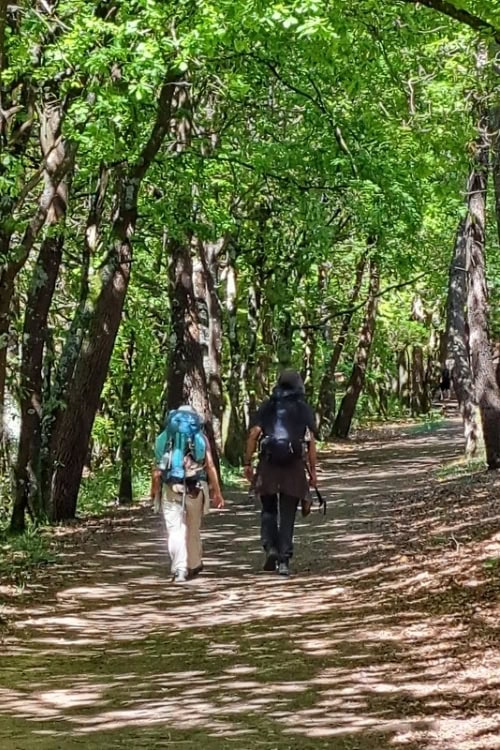
Walking, instead of speeding along in a car, provides intimate moments to breathe in the oxygen exhaled by 800-year-old chestnut trees along the trail out of Sarria. Pebbles crunch beneath your shoes.
Robins sing in the trees, and tiny, delicate flowers bloom along the way. We walked through stone villages with 20 residents. We visited ancient Celtic ruins. And we stamped our pilgrims’ passports in hotels, churches, and coffee bars that dot the trail.
We passed fields of cows and sheep, barns, and vegetable gardens. In one town, we stopped and waited while a farmer herded his caramel-colored cows down the dirt road and out to pasture. In another, a goat nuzzled a black dog twice its size.
The dog barked all the while at the passersby. The lush rolling hills, the shady trails, crisp cool temperatures, and endless blue skies were all conducive to relaxing, meditating, or praying the day away.
IX. Celebrate Your Accomplishment
I wondered if walking for hours every day would become tiresome and hard on my body, but the opposite was true. I felt stronger and more energized as the days passed. By the last full day before entering Santiago de Compostela, we were all exhilarated.
We started out in Lavacolla, where it is said that pilgrims would wash in the river before entering Santiago de Compostela. We posed before the metal pilgrim statue and hiked uphill to the Mount of Joy Park, where we could see the spirals of the cathedral in the distance.
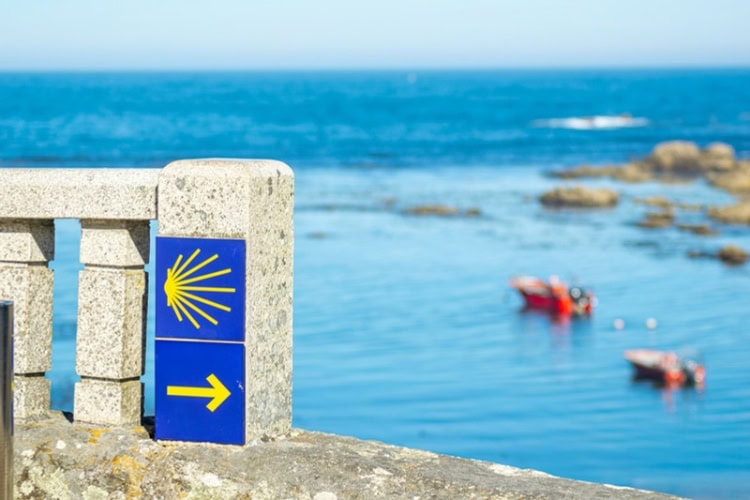
From there, we followed the bright yellow scallop shell and arrows on the trail markers into Old Town. We heard the Gaita Gallega bagpipe and knew we were entering the arch that opened onto the Cathedral’s plaza.
Honestly, I teared up when we stood in the massive plaza and looked at the impressive Cathedral.
We celebrated our achievement by driving to Finisterre on the rocky peninsula of Spain’s west coast. At the lighthouse, the final scallop and arrow sign mark 0.0 kilometers. This was the end of the world back in the dark ages, when people still believed the earth was flat.
We also spent a few days exploring the Romanesque, Gothic, and Baroque buildings and monuments in the old town of Santiago de Compostela. Spending a few extra days enjoying this part of Galicia is well worth it.
Best Santiago de Compostela Tours & Excursions
X. Pick Up Your Diploma
The Pilgrim’s Office is close to the Cathedral in Santiago de Compostela. Here you can show your pilgrim’s passport, fill out a form, and pick up your Compostela Certificate.
The rules provide that pilgrims who can show two stamps a day of walking at least 100 km (200 km by bike) on any part of the Way qualify for the certificate. The free diploma is printed on parchment with your name and text in Latin. It acknowledges and celebrates your accomplishment.
Getting our certificate was easy, fast, and fun. The Statistics | Pilgrim’s welcome office are based upon the number of people who get their diplomas. By picking up yours, you contribute to more knowledge of the Camino and its pilgrims.
For all who are planning to make the journey, especially after 65, Buen Camino!
Need a hand planning your trip? Here are the sites and services we rely on most, from booking tools to travel products we love.
Inspire your next adventure with our articles below:
- Finding Serenity and Connection On The Less-Traveled Portuguese Camino
- Embarking on the Camino De Santiago: A Life-Changing Adventure
Author Bio: Traci Romine is an American journalist, environmental advocate, and former philanthropic grantmaker. She is a world traveler, having grown up in Thailand. For the past 30 years, she has lived in Brazil. Upon retiring this year, she splits her time between her home in Sao Paulo and her condominium in Florida.
Want to discover more hidden gems and helpful travel tips? Join our free newsletter for the latest travel secrets and travel articles.
We are reader-supported and may earn a commission on purchases made through links in this article.

- Darwin, Australia’s Northernmost Capital, Combines Vibrant Markets, Waterfront Life and Access to Kakadu and Litchfield - October 25, 2026
- Paarl: South Africa’s Secret Winelands Escape Where You Can Stay in Historic Wine Tanks - October 25, 2026
- A Quest for the Best Frango Assado in Portugal’s Algarve - October 24, 2026
Planning another trip soon? ✈️
Add GoWorldTravel.com as a preferred source on Google. Click the button below so our local guides, packing hacks, and hidden-gem itineraries always show up first when you search!
Add to Preferred Sources