
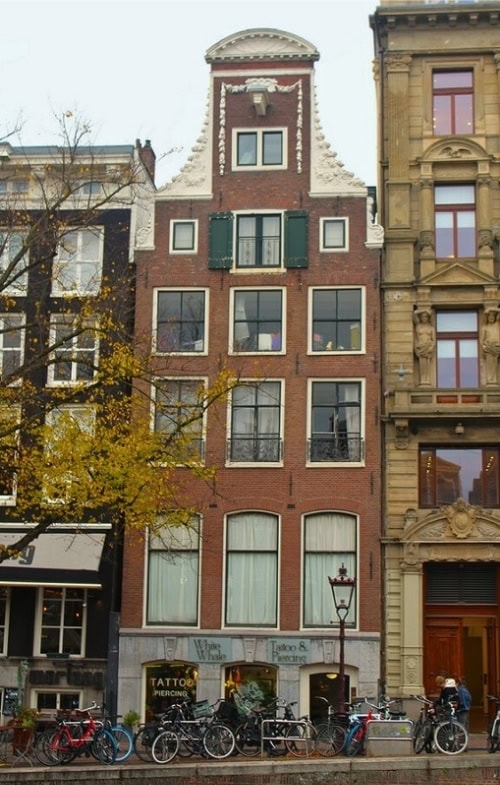
Artists create their designs in a storefront studio at 453 Keizersgracht – tattoo artists, actually, engraving clients with their colorful interpretations of historic themes and real-life images in what’s now a tattoo and body piercing parlor.
In this same Amsterdam canal home a century and a half earlier, art coincidentally was also the focus in what was then a gallery and bookstore – a place frequented, in fact, by Vincent Van Gogh.
The famous Dutch artist stopped by in 1878 to see his uncle, Cornelis Marinus “Cor” van Gogh, who owned the gallery along this prominent city canal named after Holy Roman Emperor Maximilian I of Austria.
“Vincent would visit when he needed a break from his studies,” explains Amsterdam private tour guide Mark Law.
“He loved leafing through back issues of art magazines in which he said he found ‘many old friends.’”
A Tsar’s Surprise Visit
It’s just a short walk, meanwhile, to 317 Keizersgracht, where Russian Tsar Peter the Great stayed in 1716 when visiting wealthy merchant and close friend Christoffel Brants.
“Peter arrived early and unannounced and the maid, not knowing who he was, made him wait before walking across a floor she had just mopped,” Law explains, telling the story of yet another little-known, but captivating historical moment that took place behind the walls of the city’s well-preserved canal houses.
“The tsar did a version of ‘do you know who I am?’ And her response was along the lines of ‘even if you are the mayor of Amsterdam, you still have to wait,’” Law continues.
“The maid captured the feisty spirit of Amsterdammers – that independent spirit and refusal to defer to authority – even when facing the tsar of Russia.”
Built During the Dutch Golden Age
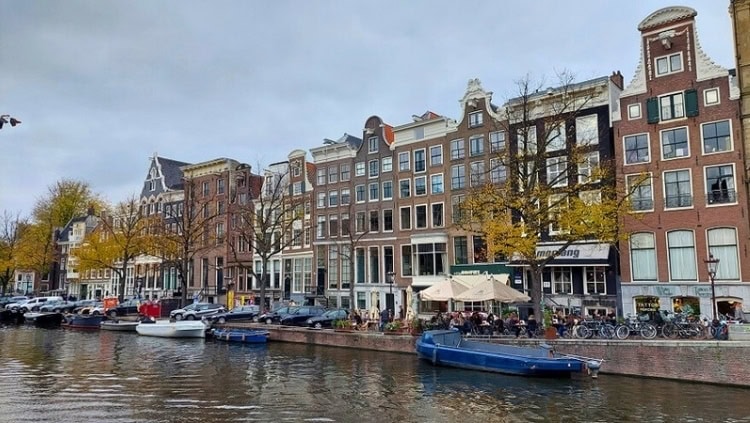
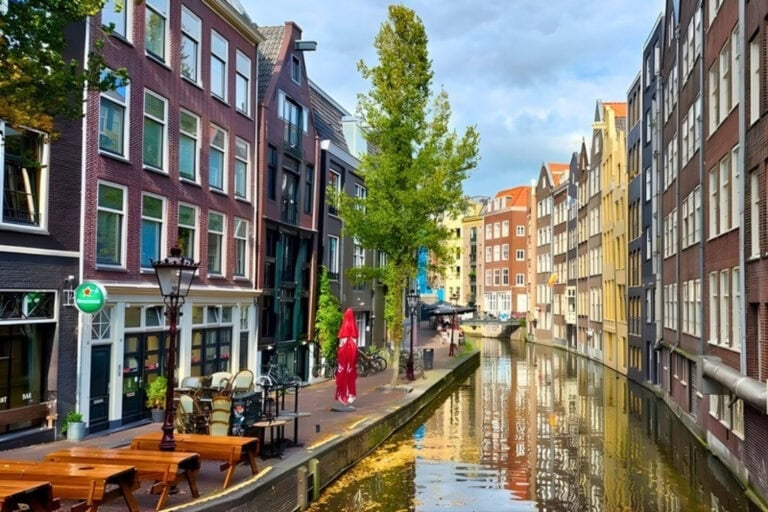
The narrow gabled canal homes – key to Amsterdam’s timeless charm – have stood since the 17th century.
Wealthy merchants built them during the Dutch Golden Age, when city planners dug the waterways of the UNESCO-recognized Canal Ring – most notably the Herengracht, Keizersgracht and Prinsengracht – to accommodate city expansion and to more easily transport goods.
Trade also flourished as Dutch East India Company voyages returned with spices and other exotic imports, transforming Amsterdam into the world’s wealthiest city.
Old Master painters Rembrandt van Rijn and Johannes Vermeer captured everyday life with their expert portrayal of light and shadow, their paintings preserving the era’s culture.
The restored canal mansions are now businesses, restaurants, hotels, museums and residences, many still with tilting facades and an upper protruding beam once used to hoist furniture by rope.
Amsterdam’s most famous canal home is arguably the Anne Frank House at 263 Prinsengracht, where the teenage diarist detailed her family’s fear and loneliness while hiding from Nazi occupiers.
Yet other properties with notable historical drama are not open for tours but certainly worth a look on the outside.
The Scene of a Historic Riot
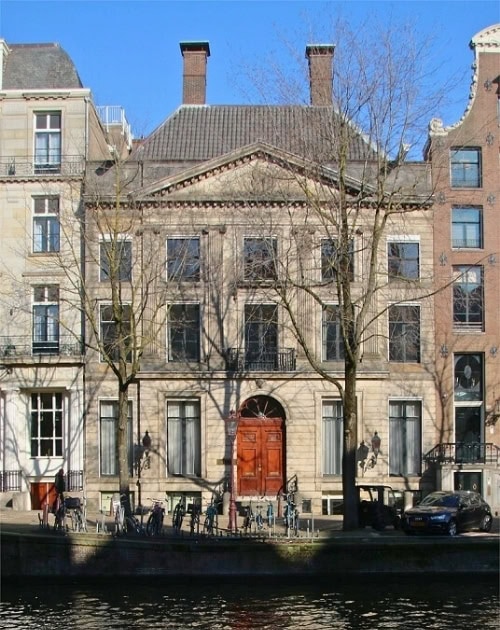
The so-called Funeral Rebellion or Undertakers’ Riot of 1696 took place at 507 Herengracht, a stately canal house with Corinthian pilasters supporting an upper triangular pediment.
Rioters looted the residence of Mayor Jacob Boreel, a powerful city leader and former ambassador to France, while protesting new city-imposed burial taxes and a reduction in private undertakers, claiming the poor would no longer receive proper burials.
“Boreel’s personal revenge against undertakers who had (previously) annoyed his wife became class warfare, ending with a lamppost battering ram and 28,000 guilders in damages,” Law explains of the deadly weeklong uprising.
“This story captures Amsterdam’s paradox at the height of its power – a man who helped negotiate peace with France living in a house that mimicked the town hall itself, and yet unable to keep peace on his own streets.”
Looters threw the home’s furniture into the canal and 12 of them were later sentenced to death.
“Again we see feisty Amsterdammers – the common people – not kowtowing to the rich or famous,” asserts Law.
A Radical Press on Reguliersgracht
Another tidbit of historic relevance took place at the plain brick canal house at 19 Reguliersgracht, which published De Nieuwe Amsterdammer, the city’s Bolshevik intelligentsia magazine from 1914–20.
The publication started just as World War I erupted, with radical writers denouncing the war and posting critical political cartoons while the country sought neutrality.
“They swung so extremely to the left that advertisers fled and the magazine closed in 1920,” notes Law.
A Clandestine Church
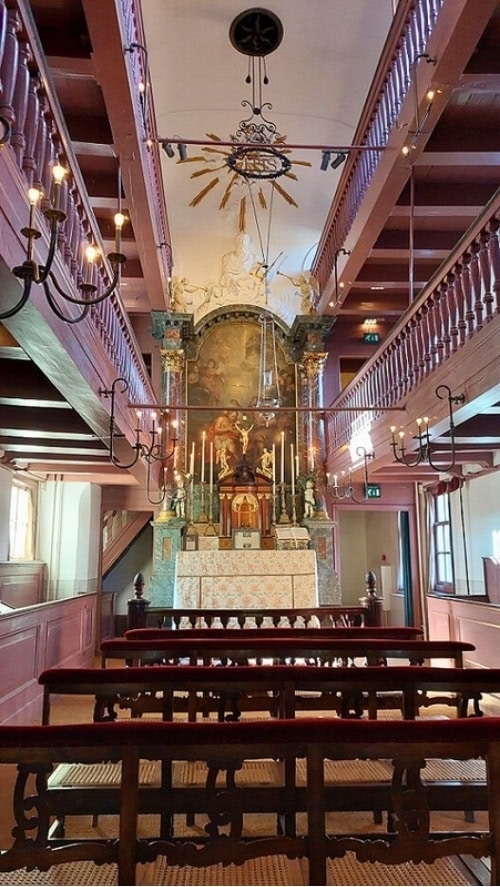
In the heart of the city, a simple-gabled canal house at 38–40 Oudezijds Voorburgwal hides a church where Catholics once worshipped in a Protestant-dominated society.
Featured as a bucket-list location in the 2025 Netflix movie My Oxford Year, Our Lord in the Attic Museum is Amsterdam’s second oldest, following the Rijksmuseum.
Wealthy merchant Jan Hartman bought the home in 1661 and, within two years, transformed its upper floors into a makeshift house of worship, where double balconies overlook a Baroque altar with twin marble columns.
“Many visitors are impressed by the perseverance of Hartman, who built this church, and surprised by his strong belief that everyone must be able to practice their religion,” says museum staffer Victor de Moor.
“He made it possible by using such a big part of his own house and opening it up to the local Catholic community, creating a safe space.”
The home’s lower floors include a richly decorated 17th-century parlor with original paintings and Hartman’s coat of arms, and an informal family drawing room with a cramped bed cabinet typical of the era, as the Dutch often slept sitting up, fearing blood pooling to their heads.
Creaking narrow stairwells lead to the elongated church’s three-story atrium reaching up to the attic, a space that accommodated 150 worshippers.
“Many like that it’s not only a small church but a historic canal house, unique with an interesting story,” says de Moor.
The Golden Bend’s Quirky Museum
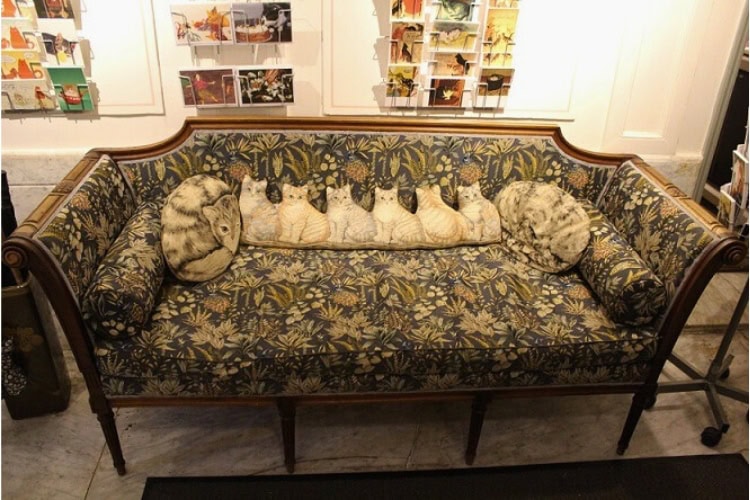
The 17th-century mansions built along a curve of the Herengracht remain some of Amsterdam’s most sought-after properties today.
In this so-called Golden Bend neighborhood, the home at 497 Herengracht houses perhaps the city’s quirkiest attraction: the KattenKabinet or Cat Museum.
Feline art adorns spacious high-ceiling rooms, including a poster of a cabaret singer holding her black cat by Post-Impressionist Henri de Toulouse-Lautrec, and photos of artists Salvador Dalí and Pablo Picasso posing with their animals.
Museum founder Bob Meijer bought the mansion in 1985 and started the museum five years later as a tribute to his longtime feline companion named John Pierpont Morgan.
“My father had a big heart for cats from his youth and was an art lover,” says son Willem Meijer.
“Every five years, we would have a birthday party for Morgan.”
Paintings of curious cats in tight spaces cling to the mansion’s walls and sculptures top mantles and tables.
And no surprise that a few live cats may cuddle up to visitors.
Its quirky theme landed the museum in the 2004 movie Ocean’s Twelve as the home of an agoraphobic antiques dealer.
Gables, Cornices and Decorative Wall Plaques
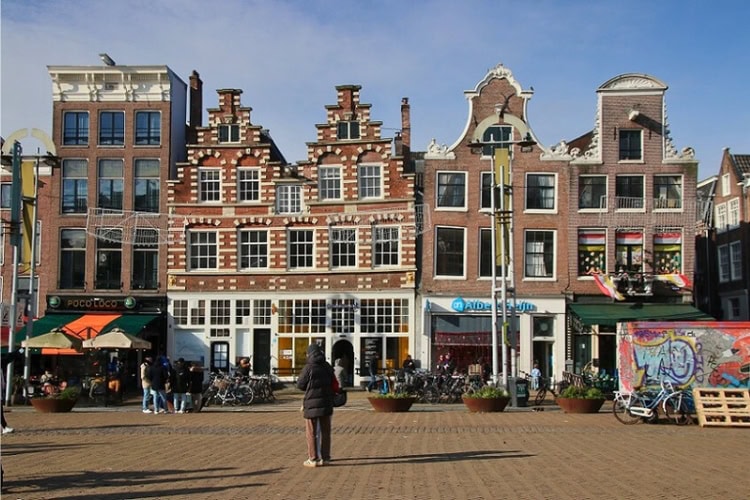
A closer look at each canal house reveals architectural gems: elaborate gables in step, neck and bell styles, cornices, Corinthian columns and wall plaques – often different designs in close proximities.
“This is because the front of the house façade can be quite easily changed,” says Law.
“People updated their properties with changing fashions, which makes for the wonderful, varied cityscapes we have in Amsterdam.”
Stories Written in Stone
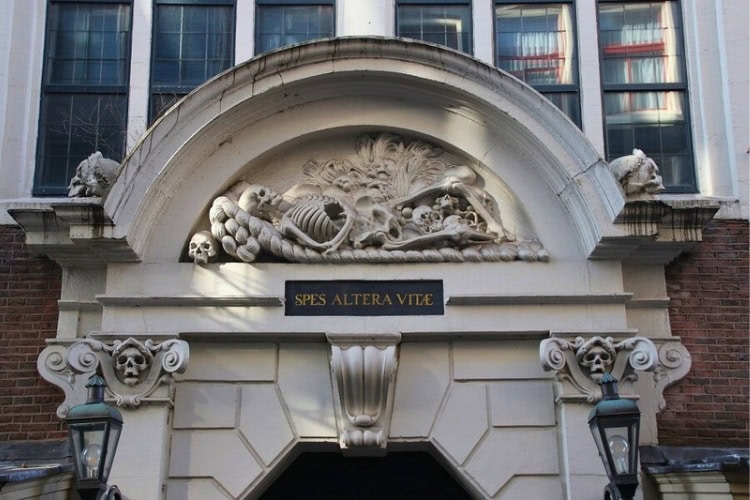
A Louis XIV-style cornice with decorative nymph reliefs, for example, tops the house visited by Peter the Great.
“The heads facing each other on the urns are thought to be depictions of Brants and Peter,” notes Law.
Others include an eerie skeleton figure above the entrance of St. Olof’s Chapel (Amsterdam’s oldest, now an event venue) through which bodies were brought for burial.
Statues of Neptune and Mercury decorate the Baroque-era gable of 326 Singel, representing Dutch Sea Power and trade.
And the gable atop 116 Singel features peculiar faces with large noses in Louis XV Rococo decorations.
“What these heads with large noses refer to is simply lost to time,” muses Law.
An Exclusive Brothel
Amsterdam’s longtime tradition of tolerance remains today with legal Red Light District prostitution, licensed cannabis coffeeshops and progressive LGBTQ+ policies.
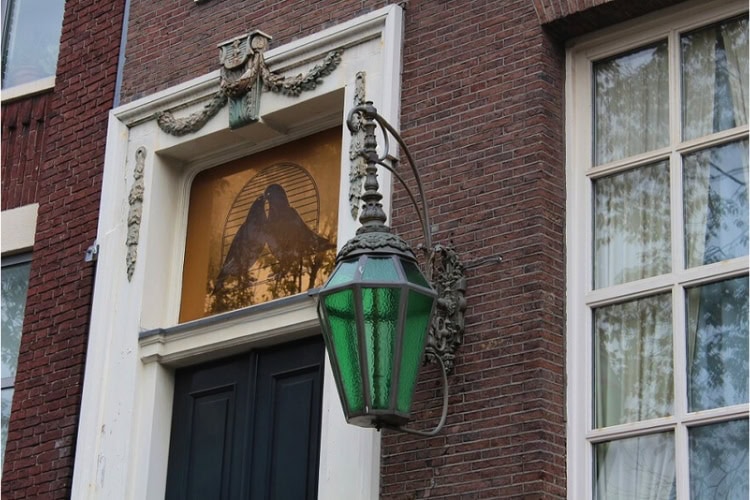
So it might seem a bit confusing to learn that a brothel – exclusive and expensive, yet well known to many – was sort of hidden in the canal house at 295 Singel.
A green lantern next to the doorway and an image of two kissing lovebirds are the only indications of what took place inside the former Yab Yum Brothel.
“We have many in Amsterdam that’s known as Sin City, but this was an infamous brothel where people with power, criminals and high-up politicians came to enjoy some companionship,” says Thomas van Kooten, project manager and guide with the canal cruise tour operator Rederij de Nederlanden in an adjacent canal house.
“In my opinion, it’s one of the icons of Amsterdam. I always love to pass by here.”
If You Go:
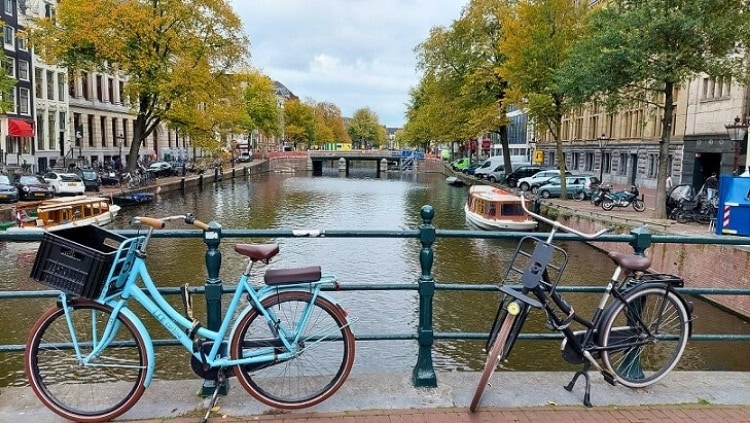
Tours: Amsterdam private tour guide Mark Law (thatdamguide.com) — a Rick Steves-recommended guide whose deep knowledge of the canal houses and their hidden histories is the backbone of this piece — is an excellent starting point for a personalized experience.
Canal Cruises: The view from the water is unlike anything you get on foot. Book a canal cruise on Viator — options range from intimate electric boat tours to private historic salon boats.
Sights: Our Lord in the Attic Museum at 38-40 Oudezijds Voorburgwal and the KattenKabinet at 497 Herengracht are both worth a visit. The I Amsterdam City Card covers entry to more than 70 museums and attractions, free public transportation, canal cruises, and bicycle rentals — details and booking at iamsterdam.com.
Flights: Search and compare flights to Amsterdam Schiphol at CheapOair.
Accommodation: Browse hotels near the Canal Ring on TripAdvisor.
eSIM: Stay connected on arrival with an Airalo Netherlands eSIM — no SIM swapping required.
Travel Insurance: Compare policies at Squaremouth before you go.
Tourism Info: iamsterdam.com
Need a hand planning your trip? Here are the sites and services we rely on most, from booking tools to travel products we love.
Inspire your next adventure with our articles below:
- Ghent, Belgium: The Underrated City With Medieval Canals, a Castle, and No Crowds
- Beyond Amsterdam: The Netherlands’ Best Towns, Islands and Experiences
Author Bio: A former Houston TV news reporter, Richard Varr is a freelance travel writer and a long-time member of the Society of American Travel Writers (SATW). He’s a frequent contributor to Porthole Cruise and Travel Magazine and the Good Sam RV Club’s Coast to Coast. Other publications have included the onboard magazines for major cruise lines, AllThingsCruise.com, msn.com, Toronto Star, London Telegraph, Dallas Morning News, Miami Herald, TravelWeekly.com, AAA Home & Away, EastWestNewsService.com and many others. Richard wrote the Dorling Kindersley Eyewitness Travel Guide to Philadelphia.
Want to discover more hidden gems and helpful travel tips? Join our free newsletter for the latest travel secrets and travel articles.
We are reader-supported and may earn a commission on purchases made through links in this article.

- Slow Down on Prince Edward Island: A Relaxed Four-Day Itinerary of Dunes, Seafood and Seaside Inns - September 25, 2026
- Two Sides of Cape Town: Table Mountain Trails, Winelands Dawn and Township Voices - September 25, 2026
- St. Pierre and Miquelon: Visit France Without Leaving North America - September 25, 2026
Planning another trip soon? ✈️
Add GoWorldTravel.com as a preferred source on Google. Click the button below so our local guides, packing hacks, and hidden-gem itineraries always show up first when you search!
Add to Preferred Sources